Gothic crescent moon tattoos
The crescent moon is the night sky's signature in gothic tattooing, from a single thin curve on the wrist to a triple moon or an alchemical sun and moon. Its meanings run from ancient goddesses to modern witchcraft.
55 designs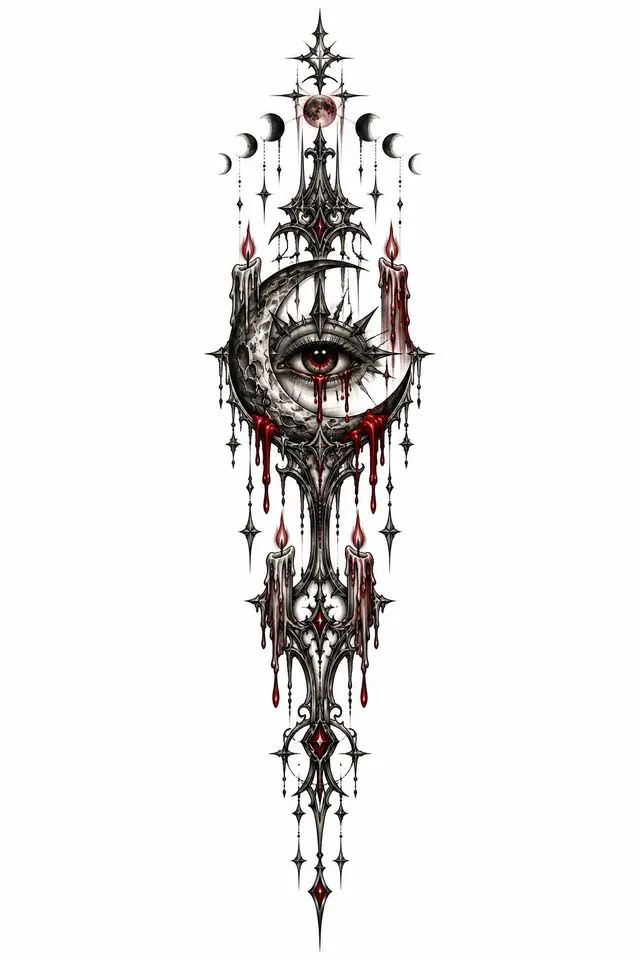
What a gothic moon tattoo is
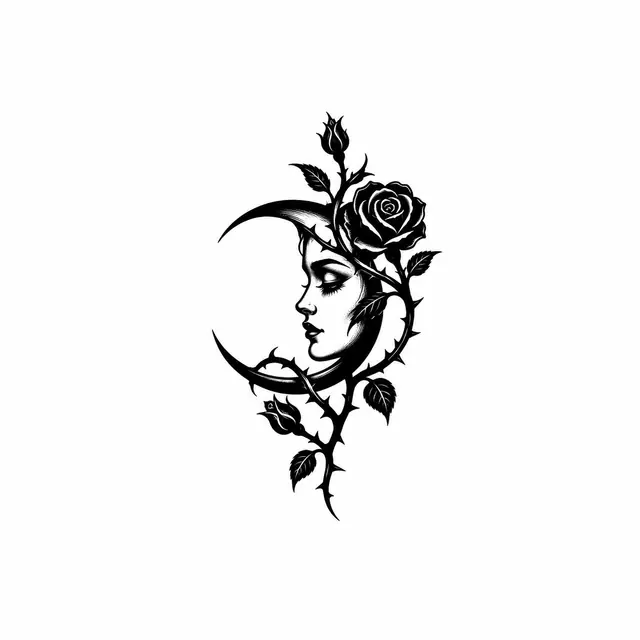
A crescent moon is easy to tattoo and hard to make interesting. Gothic designs solve that by giving the moon company or character: a face in profile, a skull resting in its curve, roses with thorns winding around it, an eye at its center.
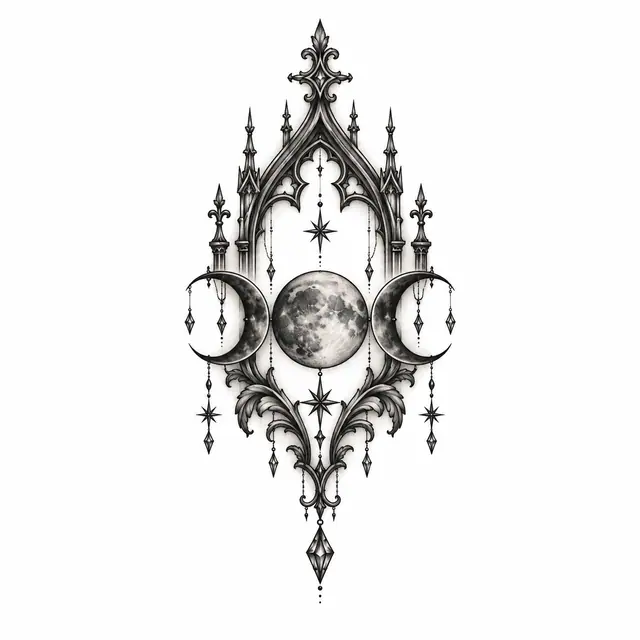
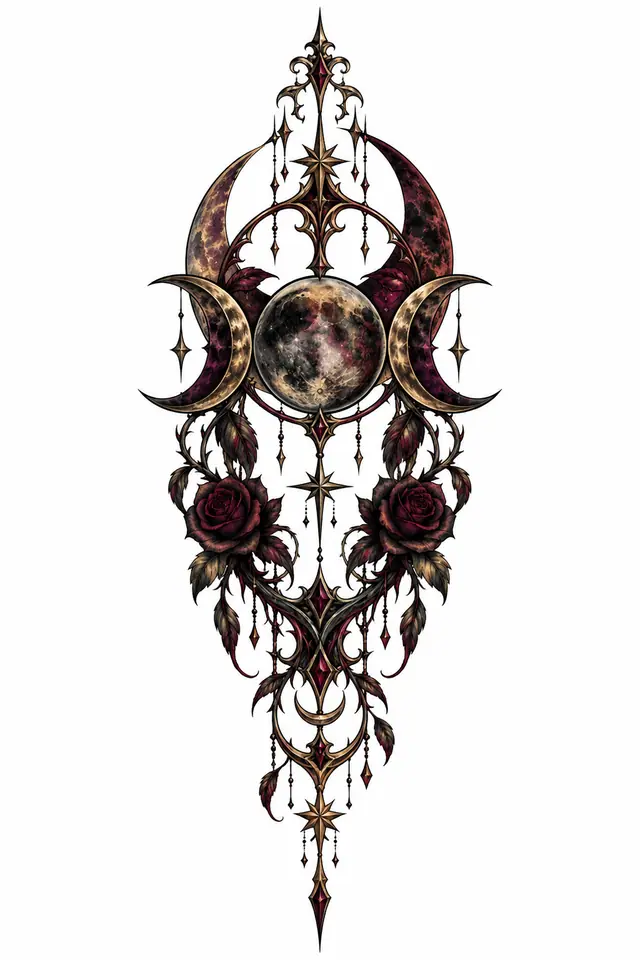
The gallery here covers a crescent moon with a face in profile, a row of moon phases, a crescent with hanging stars, a crescent cradling a skull, the triple moon symbol, an all-seeing eye inside a crescent, a crescent entwined with thorned roses, and an alchemical sun and moon with faces. The moon also appears as a background element across the site, behind bats, ravens and cathedral spires.
Where the imagery comes from
The moon has been tied to goddesses for a very long time. In Greek and Roman religion, Artemis (Diana to the Romans) was linked with the crescent and the hunt by night, and Selene was the moon itself. Hecate, goddess of crossroads, magic and the night, was often shown in triple form, three figures back to back, and she became closely linked with the moon in later antiquity.
The triple moon symbol as tattooed today, a waxing crescent, a full moon and a waning crescent, is much younger. It comes from modern paganism and Wicca, where it stands for the Triple Goddess as maiden, mother and crone. That three-stage goddess owes a great deal to Robert Graves’s book The White Goddess (1948). The symbol draws on ancient material, but as a single emblem it is a 20th-century creation.
In alchemy, the moon stood for silver and the sun for gold, and the two were often drawn with human faces. Illustrated alchemical manuscripts of the 16th and 17th centuries are full of paired suns and moons, which is where the sun-and-moon-with-faces design in our gallery comes from.
The crescent with a face in profile, the “man in the moon,” was a favorite of early printers, almanac makers and sign painters. Its sleepy, knowing expression is a European folk image rather than a religious one.
The moon’s darker associations have old roots too. The word lunatic comes from Latin luna, from the belief that the moon affected the mind. In the tarot, the Moon card stands for illusion and uncertainty.
What it means today
Modern readings depend a lot on the design:
- A single crescent is usually read as change, growth or femininity, sometimes as a love of night.
- Moon phases stand for cycles, often a life in stages or a reminder that hard phases pass.
- The triple moon is widely worn as a sign of pagan or Wiccan belief, or of a witchy aesthetic more loosely.
- The eye in the crescent draws on the Eye of Providence and reads as hidden knowledge, watchfulness or the occult.
- The crescent cradling a skull brings death and the night together, a quietly gothic memento mori.
- The sun and moon stand for balance between opposites, and are sometimes chosen as a couple’s tattoo split between two people.
Be aware that the crescent paired with a single star is also the emblem on several national flags and is widely associated with Islam. A crescent alone doesn’t carry that meaning, but a crescent-and-star layout can.
Popular designs and combinations
The crescent with a face has the most personality. Keep the profile simple: brow, nose, lips and a closed or half-closed eye, since the face lives in a narrow strip.
Moon phases in a row are made for the spine, the back of the neck, along the collarbone or down the inner forearm. Choose five, seven or nine phases so the full moon falls in the center.
The crescent with hanging stars reads like jewelry and suits the sternum or the side of the ribs.
The triple moon is symmetrical and wide, which suits the back of the neck, the sternum or the upper back.
Roses and thorns soften the crescent and pair well with black rose designs.
Night companions: a bat flying across the moon or a moth with a crescent between its wings are the natural pairings, both creatures of the night.
Styles that suit it
Fine-line is the most popular style for small moons, and a crescent is one of the few shapes that stays clean at small sizes in fine-line, because it is a single strong curve. Our fine-line gallery has many.
Dotwork is the best way to shade phases. Stippling the dark side of each moon creates a soft gradient that stays readable, where solid grey shading can look muddy. See our dotwork designs.
Blackwork gives a bold, flat crescent or a solid black full moon with crisp edges.
Etching is the right style for the alchemical sun and moon, which originally lived in engraved books.
Red accent works on a blood moon in a row of phases, or on the roses wound around the crescent.
Placement and size
- Plain crescent: works from about half an inch, so it suits the wrist, finger side, behind the ear and ankle. Our wrist designs include several.
- Moon phases: each disc should be at least about half an inch across, so a row of seven runs 5 inches or more with spacing. That makes the spine and inner forearm natural fits.
- Crescent with a face: 2.5 inches tall or more to keep the profile clear.
- Crescent with skull or roses: 3 to 5 inches, forearm, shoulder, calf.
- Sun and moon with faces: 5 inches across or more, sternum, upper back, thigh.
A thin crescent’s inner and outer curves meet at sharp points. Those points are where lines most often blur into each other, so ask your artist to keep the horns slightly thicker than they look in a drawing.
Things to watch out for
Occult designs often come bundled with extra marks: sigils, runes, sacred geometry. Check what every one of them is. Some runes and the Black Sun (Sonnenrad) are used as hate symbols, and an “occult” design copied from a random source can include one without its wearer knowing. Your artist should be able to tell you what each mark means, or leave it out.
Also decide on the crescent’s direction before the stencil is drawn. Many people only notice afterward that their “new beginnings” moon is technically waning.
Using the prompts
Each moon design is an AI concept made in ChatGPT, so let your tattoo artist redraw it for your skin and placement. Open any design to copy its prompt, then try a different number of phases or replace the skull with a raven.
Moon and occult tattoo designs
Questions people ask
What does a crescent moon tattoo mean?
Common readings include change and growth, femininity, intuition, and the night or hidden side of life. A waxing crescent is often read as new beginnings and a waning crescent as letting go.
What is the meaning of the triple moon tattoo?
The triple moon shows a waxing crescent, a full moon and a waning crescent side by side. In modern paganism and Wicca it represents the Triple Goddess as maiden, mother and crone. The symbol itself is modern, though the idea of a three-formed moon goddess has ancient roots in figures like Hecate.
Which way should a crescent moon tattoo face?
As seen from the Northern Hemisphere, a crescent shaped like a C is waning, and a crescent shaped like a reversed C is waxing. In the Southern Hemisphere it is the other way around. Choose based on the meaning you want, or ignore it if you only care about the look.
Is a moon tattoo witchy?
It can be. The moon is central to modern witchcraft and paganism, and designs like the triple moon or a moon with an eye lean in that direction. A plain crescent, though, is one of the most common tattoos there is and carries no particular religious meaning on its own.
What does a sun and moon tattoo mean?
Usually balance between opposites: day and night, masculine and feminine, gold and silver. The pairing with faces comes from alchemy, where the sun stood for gold and the moon for silver.
Related motifs
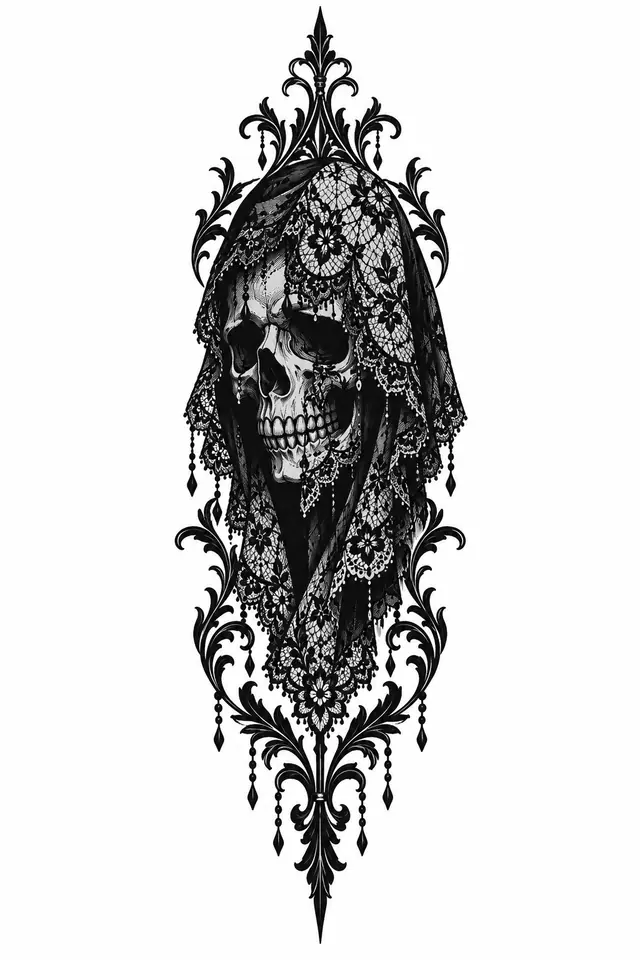 SkullMortality worn openly: the oldest reminder that life is short.
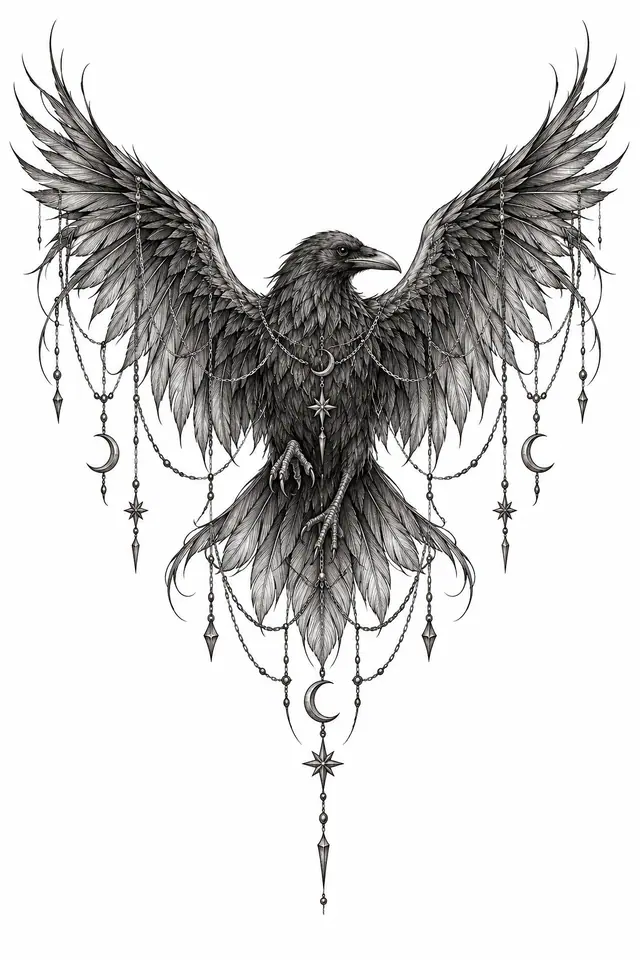 Raven and crowPoe's messenger, read as omen, memory and intelligence.
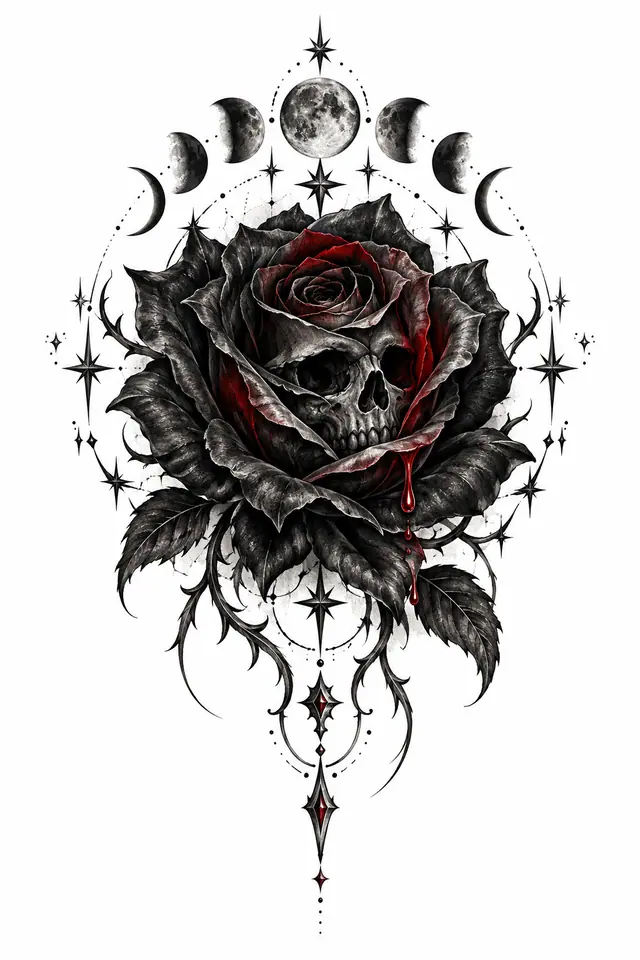 Black roseLove that outlives loss, grief and farewells.
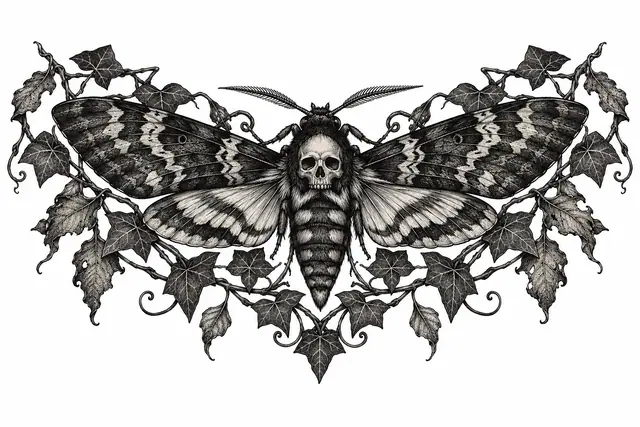 MothDrawn to the flame: transformation, night and the soul.
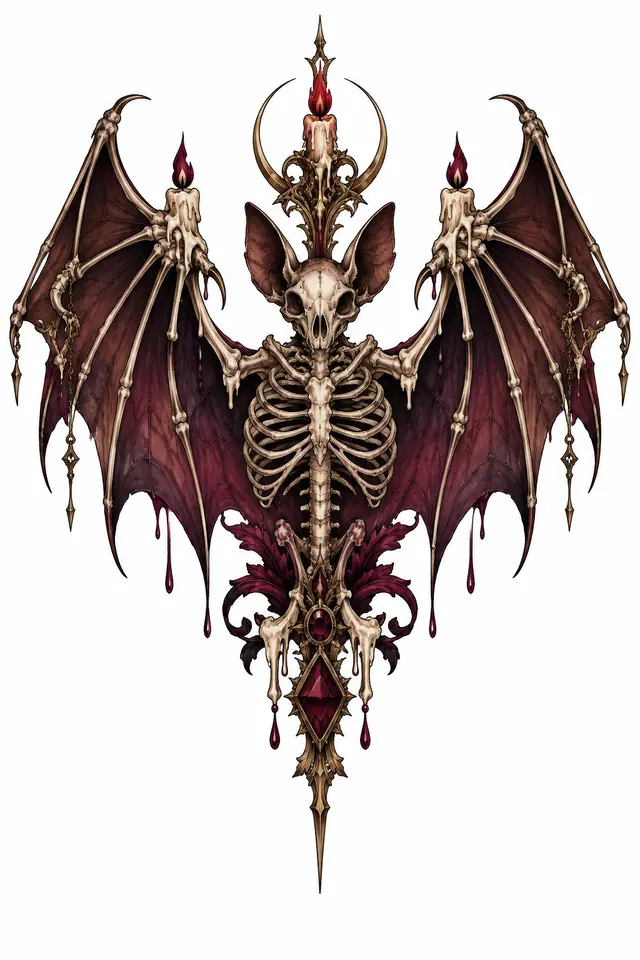 BatCreature of the night, linked with rebirth and Dracula.
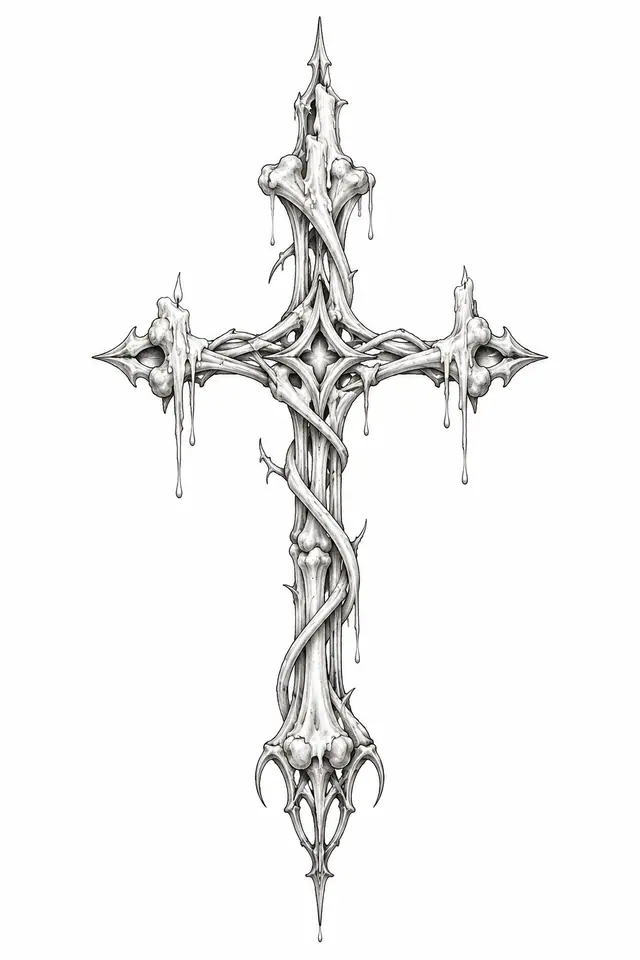 Gothic crossFaith in stone and thorns, from churchyards to chains.
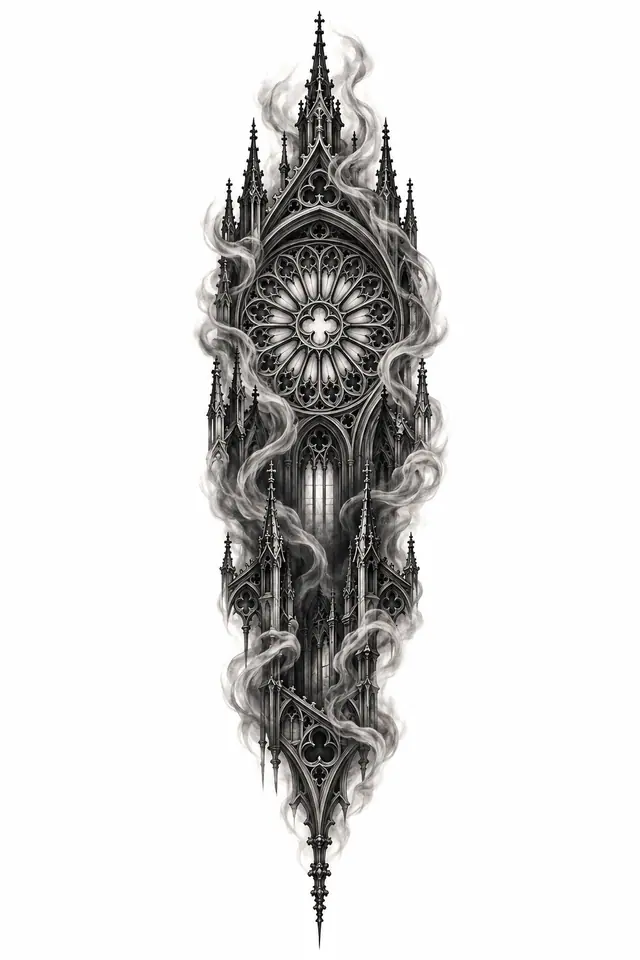 CathedralPointed arches and rose windows from 12th-century France.
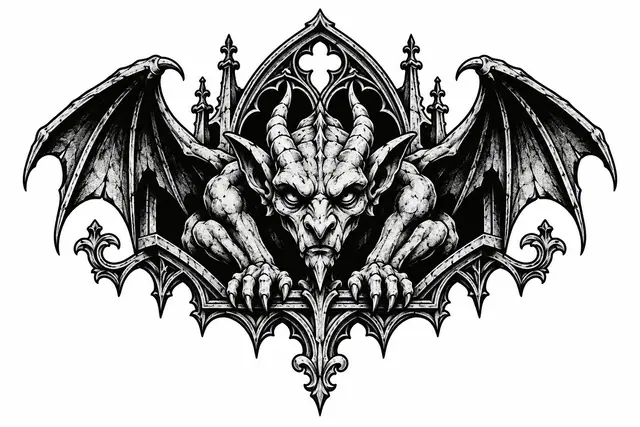 GargoyleStone guardians that kept rain and evil off the roof.
 VampireRomance and hunger, from Victorian novels to now.