Gothic spider and web tattoos
Spider and web tattoos range from a tiny spider on a thread to a full web over the elbow. The elbow web has a real prison history worth knowing, but most people today wear webs for their geometry and gothic mood.
50 designs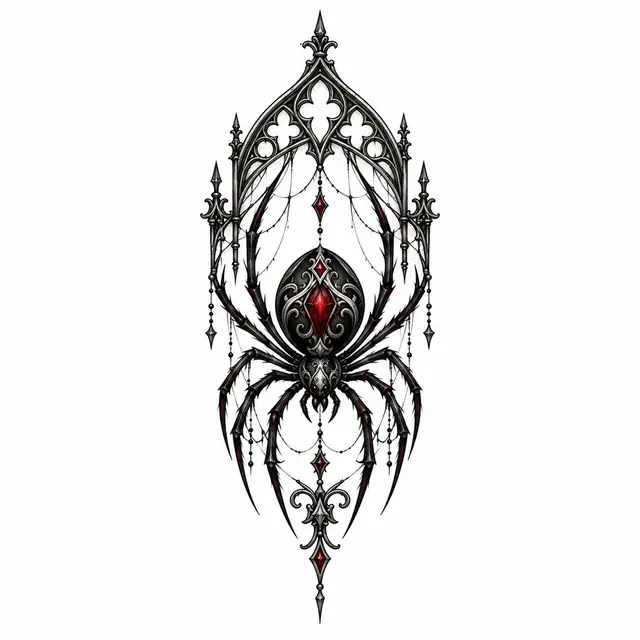
What these tattoos show
Spider tattoos come in two broad kinds: the spider as the subject, and the web as the subject with a spider as a small accent. In gothic work the two often meet, with the web giving structure and the spider giving a focal point.
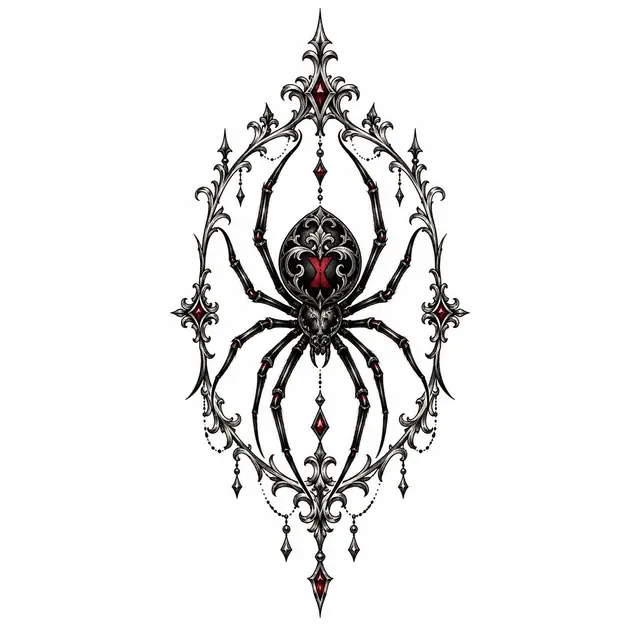
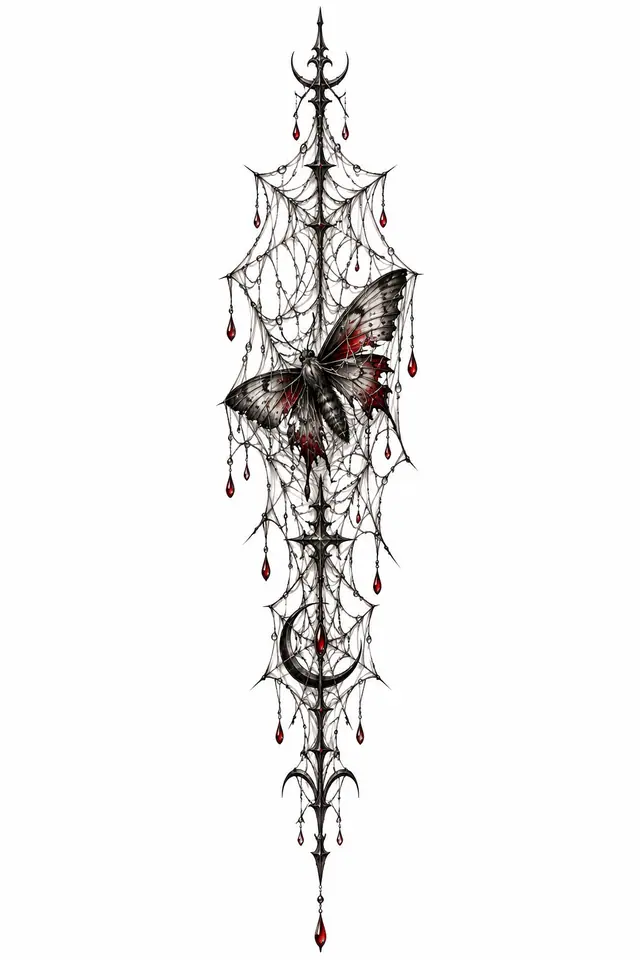
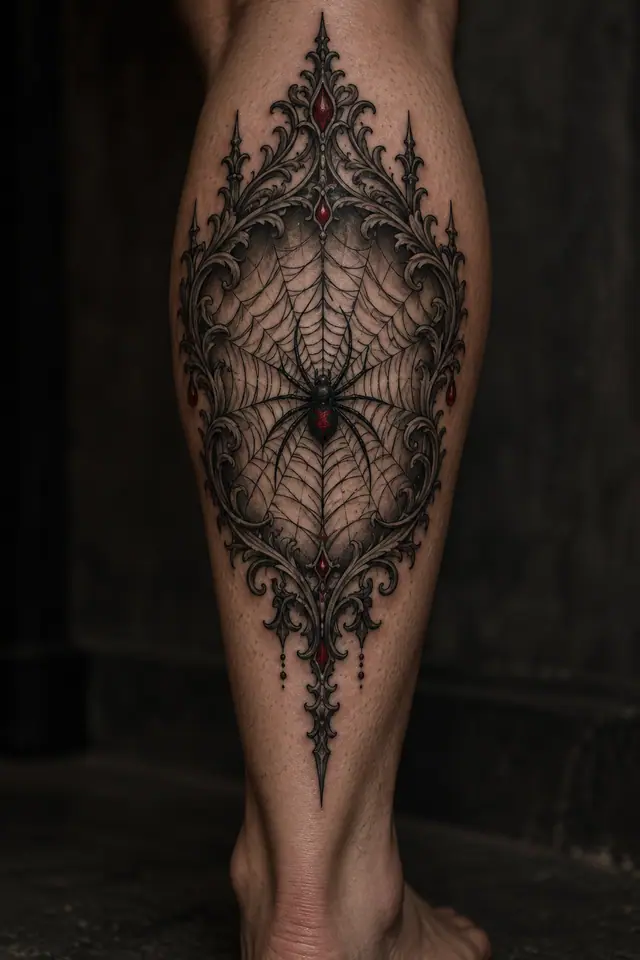
Our gallery covers both. There is a spider hanging from a single silk thread, a symmetrical web, a black widow with an ornamental body, a web in a corner with a small spider, a spider whose abdomen is a skull, a spider with crescent moon markings, and a dew-covered web with a moth caught in it.
Where the imagery comes from
The spider has a long literary life in Europe. In Ovid’s Metamorphoses, the weaver Arachne challenges the goddess Minerva to a contest, weaves a flawless cloth that mocks the gods, and is turned into a spider. Our scientific name for spiders, arachnids, comes from her.
Folk beliefs about spiders are mixed. In Britain, a tiny “money spider” landing on you was traditionally taken as a sign of good luck. Scottish legend tells of Robert the Bruce watching a spider try again and again to anchor its web and taking it as a lesson in persistence, a story popularized in the 19th century.
The cobweb became a gothic image in its own right in the 19th century. Dust and webs signal a house left untouched, time stopped. The best known example is Miss Havisham in Charles Dickens’s Great Expectations, who leaves her wedding feast to rot under spider webs for decades. Halloween decoration later turned the cobweb into shorthand for anything haunted.
The elbow web: what to know
The spider web on the elbow has a specific history in tattooing. In prison culture it has long been associated with serving time, often explained as being caught in a web, trapped in the system. In some places white supremacist prison gangs have also used it. That association is real but narrow: the elbow web is also very widely worn by people who have nothing to do with such groups.
Today most elbow webs are decoration. The elbow is an awkward joint to design for, and a web wraps it naturally, which is why so many traditional sleeves use one as a cap. Still, someone who knows the prison meaning may read your elbow that way, especially paired with other prison-style tattoos. If that concerns you, a web on the shoulder cap or knee, or one that’s clearly part of a larger gothic piece, carries less of that baggage.
What it means today
Modern readings of spider tattoos tend to be positive or at least respectful:
- Patience and skill, the builder of something intricate.
- Creativity, weaving as making art, a nod to Arachne.
- Feminine danger, especially with the black widow.
- Fate and connection, the web as threads that link everything.
- Being trapped, or escaping a trap, in designs where something is caught in the web.
The dew-covered web with a moth caught in it makes that last reading explicit. Some people wear it for a past they got out of; others like it simply for the contrast of a delicate web holding something heavier.
Popular designs and combinations
The spider on a thread is the most minimal design and one of the best small gothic tattoos. A single long line with a small spider at the end fits behind the ear, down the side of a finger, or on the ankle.
The symmetrical web is all geometry. Count the spokes (radial threads) and the rings before the stencil goes on, and make sure each ring dips slightly between spokes, the way real silk sags. Perfectly straight segments make a web look like a target.
The black widow has a glossy round abdomen and a red hourglass marking on the underside. That hourglass is a gift for gothic design, since it doubles as a memento mori symbol.
The corner web fits joints and edges well: the crook of the elbow, the collarbone, the edge of an existing piece.
The skull-abdomen spider works best when the skull is clearly a skull from a distance, so keep the eye sockets large.
The crescent-marked spider pairs well with crescent moon designs and suits a witchy collection.
Styles that suit it
Fine-line looks delicate and correct for webs, since real silk is thin. The risk is that very fine threads fade unevenly over time. Ask your artist about line weight, and look at healed fine-line webs, not fresh ones. Our fine-line gallery is a good place to compare.
Blackwork spiders, solid black with crisp leg joints, are the most durable option and look strong at small sizes.
Black and grey suits a glossy black widow or a web with dew drops, where the drops are left as bright skin with a soft shadow beneath.
Red accent belongs on the black widow’s hourglass and almost nowhere else.
Dotwork gives a spider a velvety body and makes a web look dusty and old.
Placement and size
| Design | Practical size | Good placements |
|---|---|---|
| Spider on a thread | 1.5 to 3 inches including thread | behind the ear, ankle, wrist, side of neck |
| Single spider | about 1 inch body | hand, wrist, collarbone |
| Corner web with spider | 2 to 3 inches | elbow crease, collarbone, shoulder edge |
| Full symmetrical web | 4 inches and up | elbow, knee, shoulder cap |
| Web with caught moth | 4 to 6 inches | forearm, calf, thigh |
A spider has eight legs and two body sections. Six legs makes it an insect, and it’s a surprisingly common mistake in flash. Leg joints should bend clearly, and legs need enough thickness to survive; hair-thin legs often fade first.
Elbows deserve a warning. The skin is tough and creased, ink sometimes heals patchy there, and the area is among the more painful spots on the arm. Plan for a touch-up. Our guide to gothic tattoo cost, pain and aftercare has more on healing tricky joints.
Using the prompts
These designs are AI concepts, so have an artist redraw the one you like for your body and skin. Open any spider design to copy its ChatGPT prompt, then change the caught moth to a bat or give the spider a different marking.
Spider and web tattoo designs
Questions people ask
What does a spider web tattoo on the elbow mean?
In prison culture an elbow web has long been associated with doing time, often read as being caught in the system. In some places it has also been used by white supremacist prison groups. Today many people wear elbow webs as pure decoration, especially in traditional sleeves, but the older association still exists.
Is a spider web tattoo racist?
Not in itself. Most spider webs, including most elbow webs, have no racist meaning. Because some white supremacist groups have used the elbow web, though, a web there combined with other extremist imagery can be read that way.
What does a spider tattoo mean?
Common modern readings include patience, skill, creativity and quiet danger. The spider builds something intricate from nothing and waits, which is how most wearers describe it.
What does a black widow tattoo mean?
The black widow is usually read as danger and feminine power, partly because of its venom and partly because females sometimes eat the male after mating. The red hourglass on the underside also gives it a built-in memento mori symbol.
How big should a spider web tattoo be?
Keep the gaps between parallel threads at least about an eighth of an inch. In practice that means a full web of five or six rings needs roughly 4 inches across, while a small corner web can work at 2 inches.
Related motifs
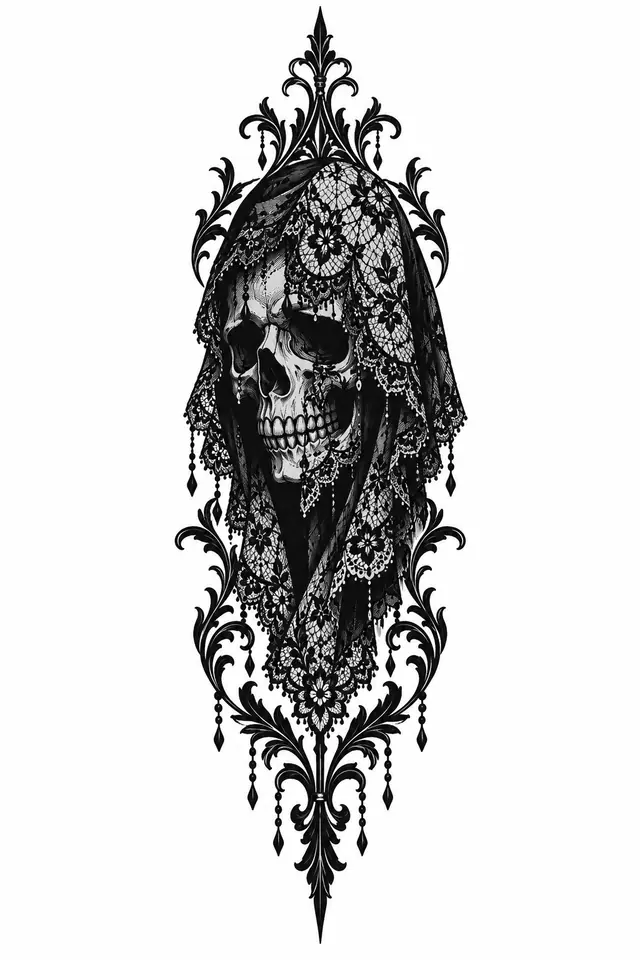 SkullMortality worn openly: the oldest reminder that life is short.
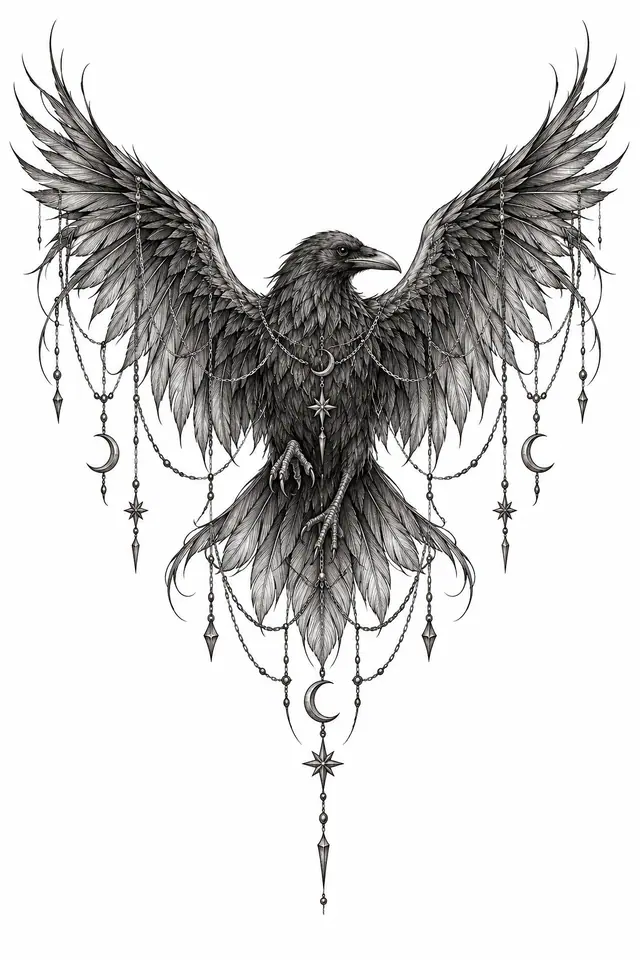 Raven and crowPoe's messenger, read as omen, memory and intelligence.
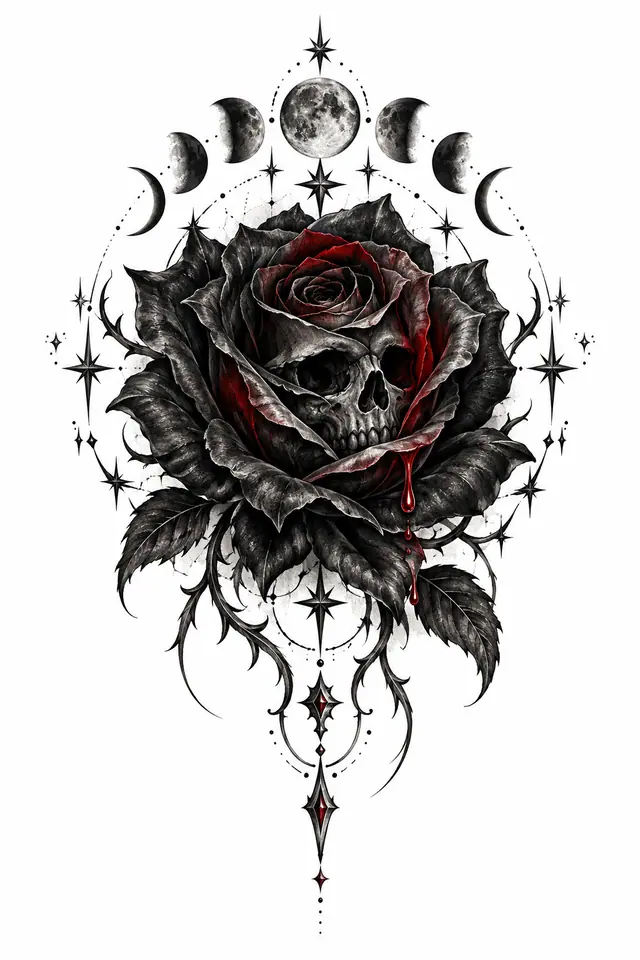 Black roseLove that outlives loss, grief and farewells.
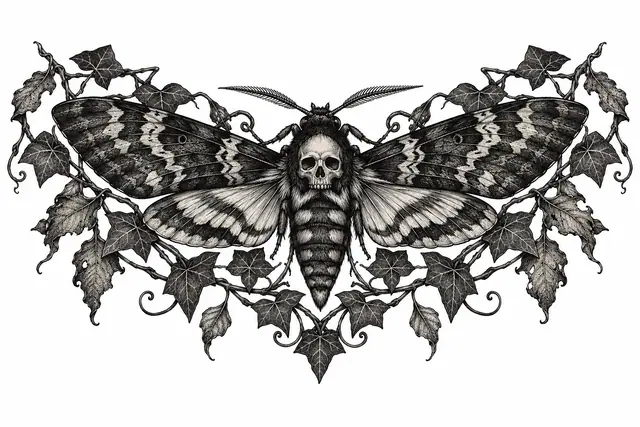 MothDrawn to the flame: transformation, night and the soul.
 BatCreature of the night, linked with rebirth and Dracula.
 Gothic crossFaith in stone and thorns, from churchyards to chains.
 CathedralPointed arches and rose windows from 12th-century France.
 GargoyleStone guardians that kept rain and evil off the roof.
 VampireRomance and hunger, from Victorian novels to now.