Fallen angel tattoos
A fallen angel tattoo shows an angel cast out of heaven, usually with broken or darkened wings. The image comes from Christian scripture and Milton's Paradise Lost, and Victorian cemetery statues gave it its weeping, stone-carved look.
55 designs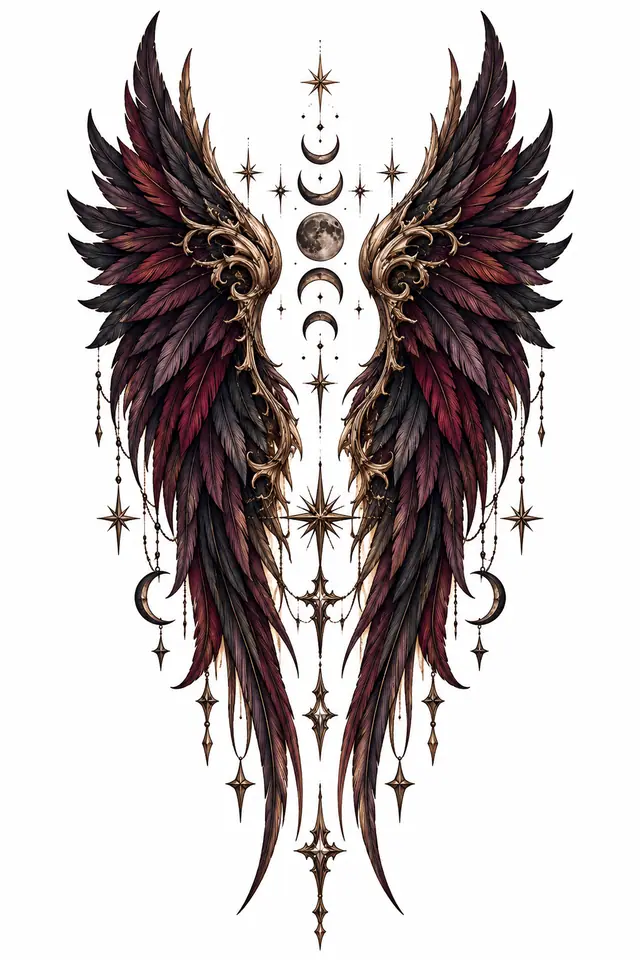
What a fallen angel tattoo shows
A fallen angel is an angel who rebelled against God and was thrown out of heaven. As a tattoo it usually shows a winged figure brought low: kneeling, falling, head bowed, wings broken or blackened. Gothic designs also borrow heavily from cemetery sculpture, so many fallen angels look carved from cracked stone rather than drawn as living figures.
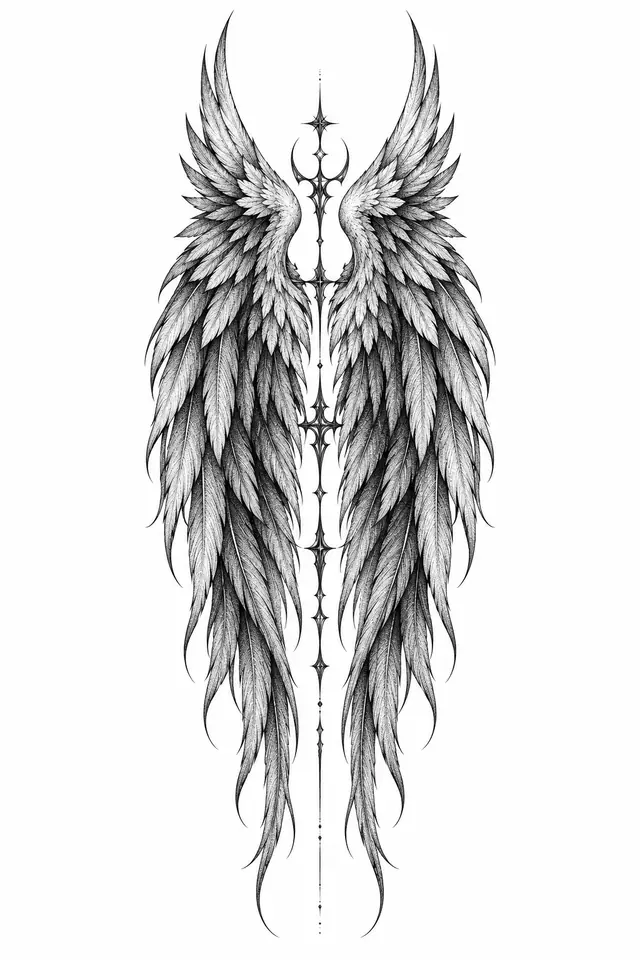
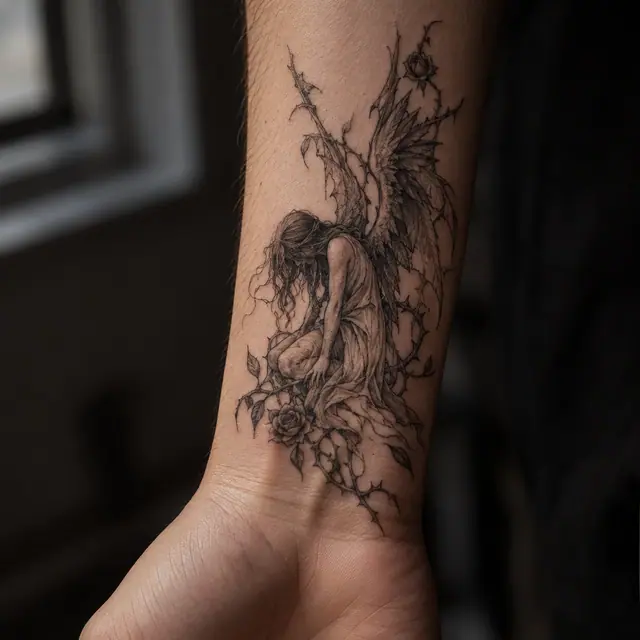
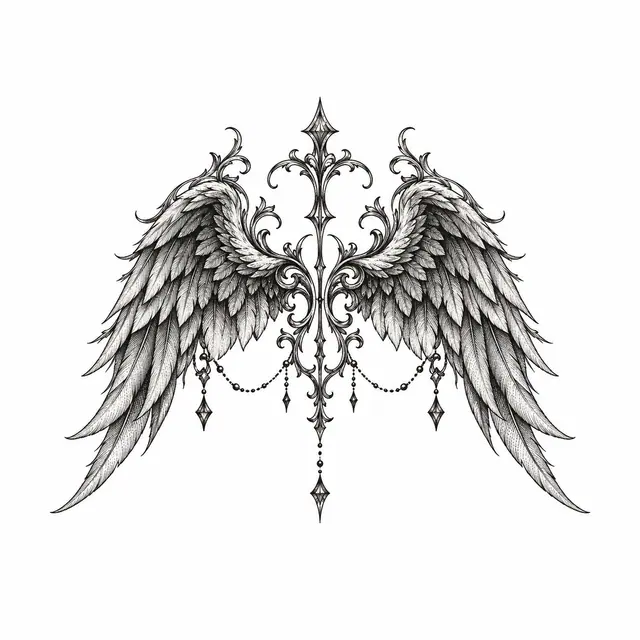
The gallery includes a fallen angel kneeling with broken wings, a weeping angel graveyard statue, a pair of feathered angel wings, a dark angel with black feathered wings and a halo, an angel statue with cracked stone and ivy, a single falling feather with drops of ink, and a skeleton angel with ragged wings.
Where it comes from
The idea of angels who fell comes from the Bible and the long tradition of reading it. Isaiah 14 mocks the fallen king of Babylon as a morning star cast down from heaven; the King James Version renders the name as “Lucifer, son of the morning,” and later Christian readers took the passage to describe Satan. The Book of Revelation describes a war in heaven in which a dragon and his angels are thrown down to earth.
The fallen angel as a sympathetic, almost heroic figure owes most to John Milton’s Paradise Lost (1667). Milton gave Satan some of the poem’s most memorable speeches, including the famous line “Better to reign in Hell, than serve in Heav’n.” Gustave Doré’s engravings for an 1866 edition of the poem fixed the look of rebel angels tumbling through darkness for generations of readers.
Nineteenth-century artists kept returning to the theme. Alexandre Cabanel’s painting The Fallen Angel (1847) shows a beautiful young Lucifer with a tear in his eye, and Ricardo Bellver’s statue of the fallen angel, sculpted in the late 1870s, stands on a fountain in Madrid’s Retiro Park.
The grieving angel came from a different place: the cemetery. Victorian garden cemeteries such as Highgate in London, opened in 1839, filled with angels weeping, pointing upward or slumped over tombs. The best known is the Angel of Grief, carved by William Wetmore Story in 1894 for his wife’s grave in the Protestant Cemetery in Rome. It shows an angel collapsed in sorrow over an altar, and copies of it were placed in cemeteries around the world.
What it means today
Keep two images apart, because they mean different things:
- The fallen angel (broken wings, falling, dark feathers) is commonly read as rebellion, regret, lost innocence or pride, or as someone who fell and is still fighting. Many wearers identify with it as outsiders.
- The weeping angel (stone, bowed head, ivy) is a mourning image. It is often chosen as a memorial, sometimes with a name or dates on the plinth.
The dark angel with black wings and a halo blends the two, keeping the holiness of the halo while the wings mark the fall. That tension is the point of the design for most people who choose it.
Some people with Christian beliefs will read any fallen angel as a reference to Satan. That’s worth knowing if family or work matters to you, but it is not the meaning most wearers intend.
Popular designs and combinations
The kneeling angel with broken wings is the central fallen angel image. The break should look deliberate: a bent wing bone with primary feathers splayed or missing, not just a gap.
The weeping graveyard statue is a portrait in stone. Cracks, moss and ivy add age, and a plinth gives you a natural place for lettering. Blackletter names and dates can be tested in our Gothic lettering generator.
Feathered wings alone are the most wearable version. A full pair across the upper back is a classic; a single wing can sit on the shoulder blade or the back of the arm.
The dark angel with a halo suits a chest or back piece and pairs well with a gothic cross or the pointed arch of a cathedral window as a frame.
The falling feather with ink drops is a small, quiet option, often chosen as one of the simpler gothic tattoo ideas for women but suited to anyone. It suggests the fall without a figure.
The skeleton angel with ragged wings sits between fallen angel and grim reaper imagery and suits a heavier, darker collection.
Styles that suit it
Black and grey realism is the strongest choice for statues and figures. Stone needs soft gradients, sharp cracks and the slight grainy texture of weathered marble, all of which come naturally with grey wash. Our black and grey designs show how stone and feathers render.
Etching recalls Doré’s engravings directly and suits the falling-angel scene in particular.
Blackwork turns black wings into strong graphic shapes and ages well, though it loses the soft stone effect.
Fine-line suits the single feather and simple wing outlines.
Red accent can be used for a drop of blood or a single red tear, which makes a weeping angel even more pointed.
Placement and size
Wings come with built-in anatomy: they belong on the back, rising from the shoulder blades. A full pair typically spans 10 to 16 inches across the upper back and takes more than one session. See our back tattoo designs for layouts.
Figures need more room than people expect. A statue’s face needs roughly 2 inches of height by itself to keep the eyes, nose and lips distinct after healing. That puts a full kneeling angel at about 7 inches tall or more, which suits the outer thigh, the calf, the side of the ribs or a half sleeve.
Feathers have their own limit. Each feather needs a visible shaft and separated barbs, and those barbs blur first. On small wings, drop the barb detail and shade feathers as smooth overlapping shapes.
- Single feather: 2 to 3 inches, wrist, ankle, behind the ear or along the collarbone.
- Single wing: 4 to 6 inches, shoulder blade, back of the upper arm.
- Kneeling or falling figure: 7 inches and up, thigh, ribs, calf, half sleeve.
- Full wings: 10 inches and up, upper back.
Things to watch out for
Symmetrical wings across the back must be stenciled with you standing and your arms relaxed, because the shoulder blades shift when you lift your arms or lie face down. A wing that looks level on the table can tilt once you stand up.
Feathers follow a structure: small coverts near the bone, longer secondaries, then the long primaries at the tip. Wings drawn as a pile of identical feathers look like fringe, so check that your artist knows the difference.
Using the prompts
The designs on this page are AI concepts, and your artist should redraw any of them to suit your back or limb. Open a design to copy its ChatGPT prompt, then swap the halo for a crown of thorns or turn the stone angel into a skeleton.
Fallen angel tattoo designs
Questions people ask
What does a fallen angel tattoo mean?
Common modern readings include rebellion, lost innocence, regret, and struggling back after a fall. Some people see themselves in the fallen angel as an outsider; others use it to mark a hard chapter they survived.
Is a fallen angel tattoo satanic?
Not necessarily. In Christian tradition the most famous fallen angel is Lucifer, so some people will read it that way. Most wearers, though, mean something personal like rebellion or a fall from grace, and a weeping graveyard angel is a mourning image, not a satanic one.
What does a weeping angel tattoo mean?
A weeping angel comes from Victorian cemetery sculpture, where angels mourned over graves. As a tattoo it is usually a memorial for someone who died, or a symbol of grief carried privately.
What do broken wings mean in a tattoo?
Broken wings usually stand for a loss of freedom, innocence or faith, often with the hope of recovery. On a fallen angel they show the moment of the fall itself.
Where is the best place for an angel wing tattoo?
Full wings fit best across the upper back, rising from the shoulder blades, where they mirror the real anatomy of wings. Smaller single wings work on the shoulder, the back of the arm or the outer calf.
Related motifs
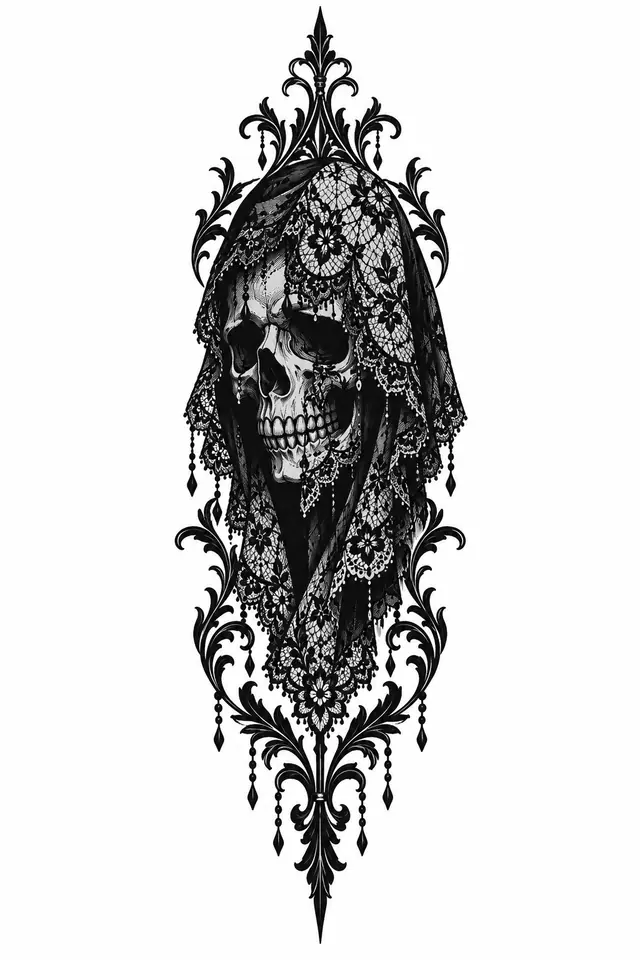 SkullMortality worn openly: the oldest reminder that life is short.
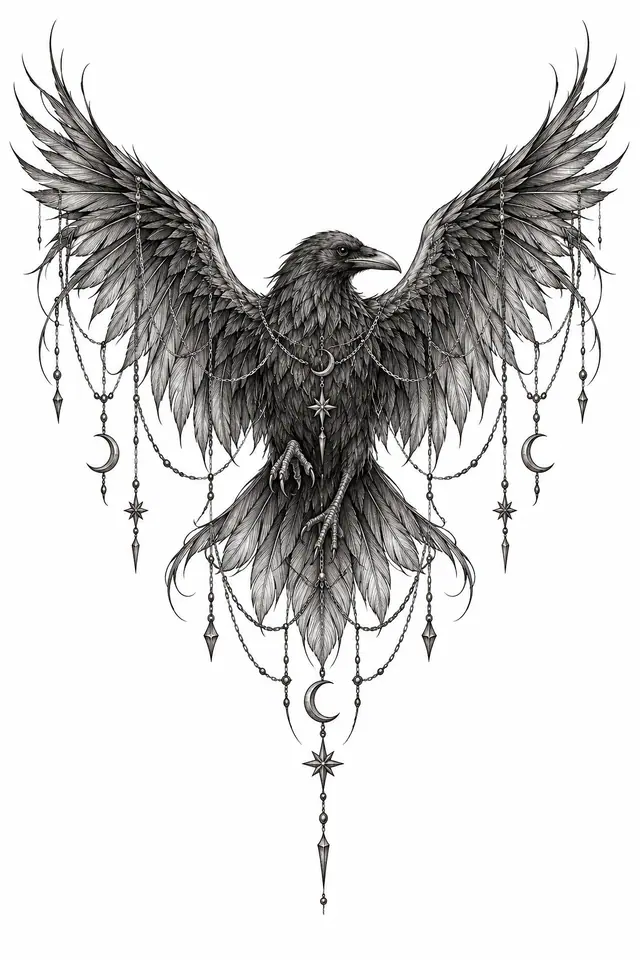 Raven and crowPoe's messenger, read as omen, memory and intelligence.
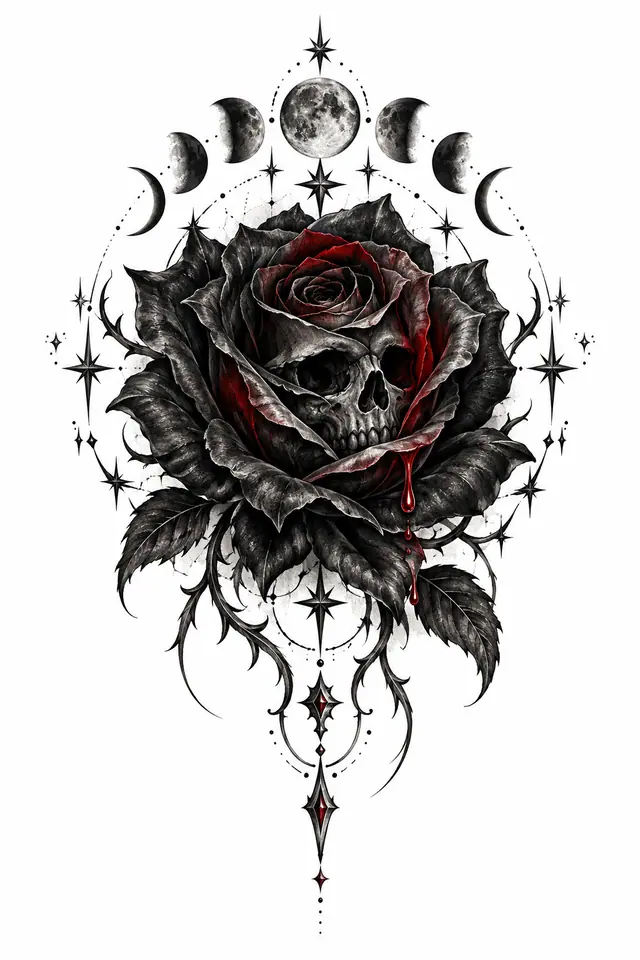 Black roseLove that outlives loss, grief and farewells.
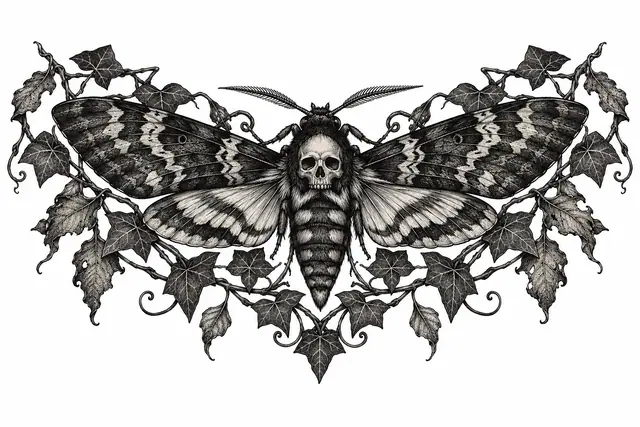 MothDrawn to the flame: transformation, night and the soul.
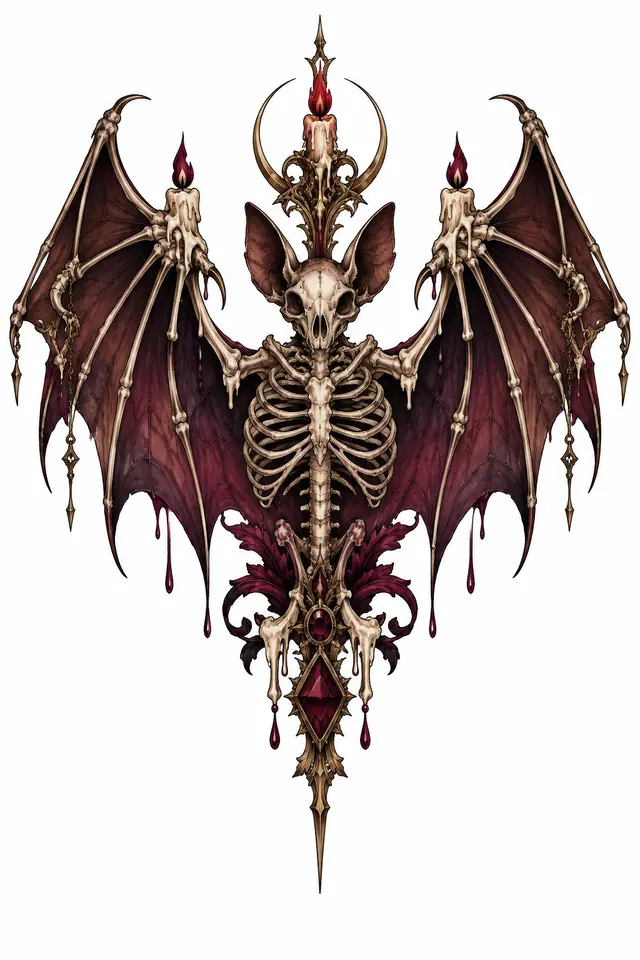 BatCreature of the night, linked with rebirth and Dracula.
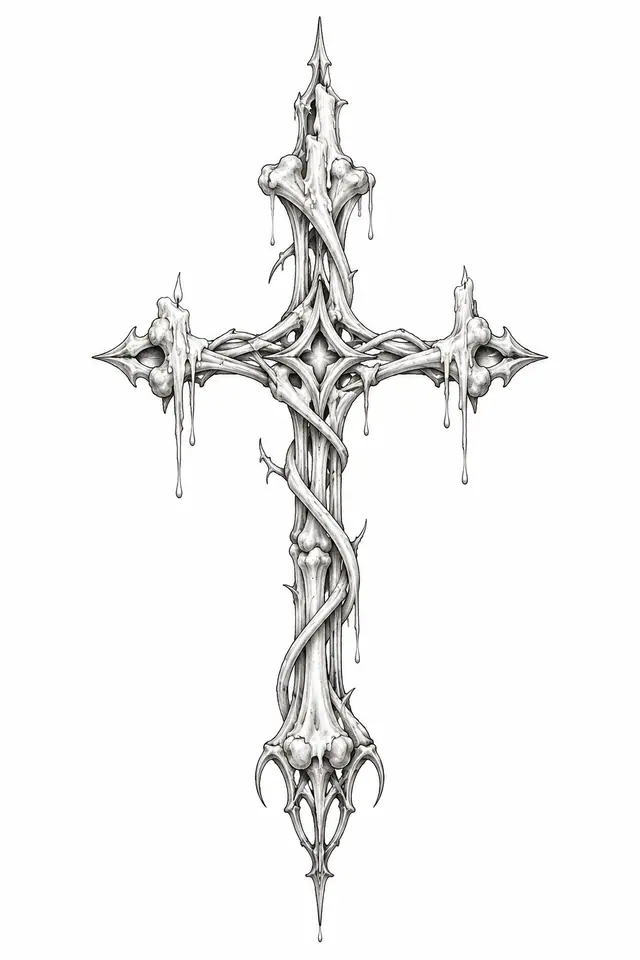 Gothic crossFaith in stone and thorns, from churchyards to chains.
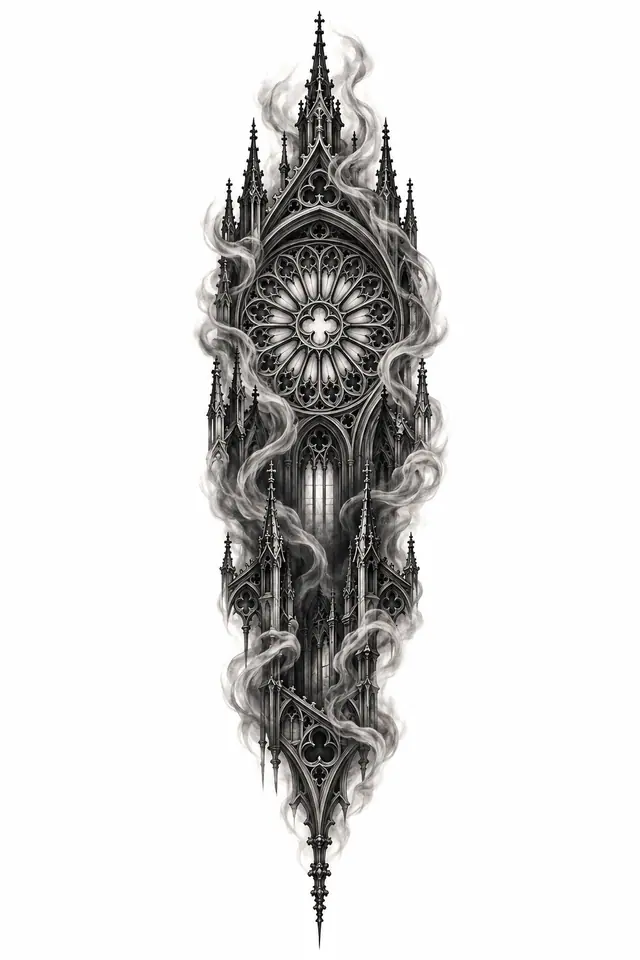 CathedralPointed arches and rose windows from 12th-century France.
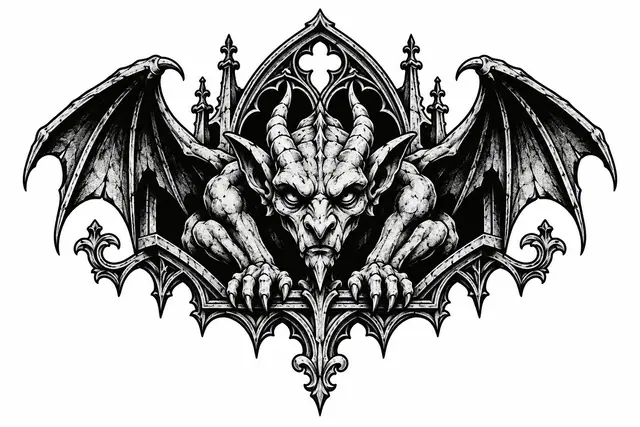 GargoyleStone guardians that kept rain and evil off the roof.
 VampireRomance and hunger, from Victorian novels to now.