Gothic vampire tattoos
A vampire tattoo draws on two very different creatures: the swollen corpse of Balkan folklore and the elegant aristocrat of 19th-century fiction. Nearly every gothic vampire design belongs to the second.
45 designs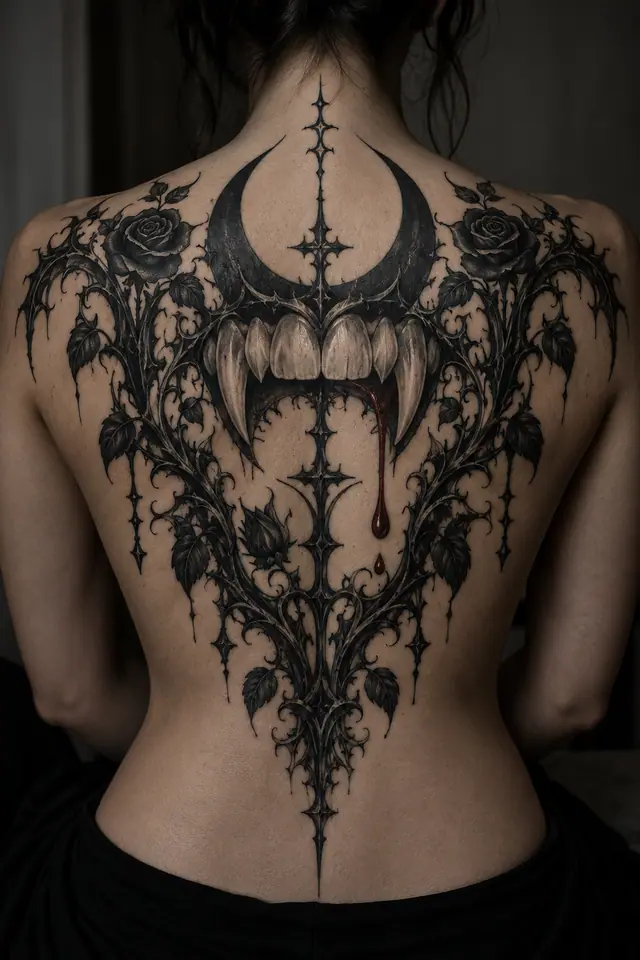
Two kinds of vampire
The vampire of folklore and the vampire of fiction are almost opposites. In Slavic and Balkan villages, a vampire was a dead neighbor: a bloated, ruddy corpse that rose from the grave to trouble its family and livestock. Nobody described it as beautiful.
The vampire of literature is an aristocrat: pale, refined, seductive and old. That figure was invented in the 19th century, and it is the one gothic tattoo art draws on. Knowing the difference helps you decide what your vampire tattoo is really about.
From the grave to the drawing room
Folklore and the panic of the 1720s. Beliefs about the restless dead existed across Eastern Europe for centuries. In the 1720s and 1730s, officials of the Habsburg Monarchy in Serbia filed reports about villagers exhuming corpses they believed were vampires. Newspapers and scholars across Europe picked up the story, and the word vampire spread into Western languages around that time.
Polidori. In the summer of 1816, Lord Byron, Mary Shelley, Percy Shelley and Byron’s doctor, John Polidori, held a ghost story contest at the Villa Diodati near Geneva. Mary Shelley’s contribution became Frankenstein. Polidori’s became “The Vampyre,” published in 1819, with Lord Ruthven, a cold, charming nobleman widely seen as modeled on Byron. That is where the aristocratic vampire begins.
Carmilla. Sheridan Le Fanu’s novella Carmilla (1872) gave the vampire a female, intimate and openly sensual form, a generation before Dracula.
Dracula. Bram Stoker’s novel of 1897 fixed the template: the Transylvanian count, the castle, the bat, the hypnotic gaze. Stoker borrowed the name from the historical Vlad III, called Dracula, though how much he knew about Vlad is debated.
Film and goth. F. W. Murnau’s Nosferatu (1922), an unauthorized adaptation that Stoker’s widow sued over, gave the vampire rat-like teeth and a long shadow on the stairs. Bela Lugosi’s Dracula (1931) supplied the cape and the accent. On-screen fangs became standard later, largely through color horror films of the late 1950s. Anne Rice’s Interview with the Vampire (1976) made the vampire a tragic narrator. In 1979 Bauhaus released “Bela Lugosi’s Dead,” and the vampire walked straight into goth culture.
Our gothic tattoo history guide follows the same thread from the Gothic novel to the dance floor.
What a vampire tattoo means today
Modern readings vary more than with most gothic motifs:
- Seduction and danger, the vampire’s oldest literary role.
- Immortality, or the cost of living forever while others don’t.
- Eternal or obsessive love, the reading behind lips biting a rose or a coffin full of flowers.
- The outsider, someone who lives by night and apart from the crowd.
- Fandom, a tribute to Dracula, Carmilla, Nosferatu or a favorite vampire story.
Gothic vampire tattoo ideas from the gallery
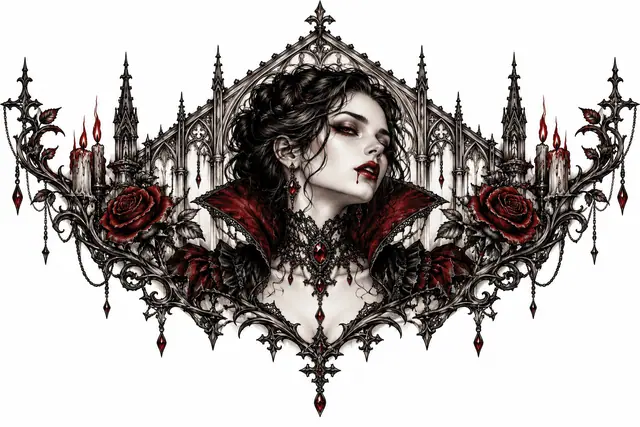
- Elegant vampire woman in a high Victorian collar, three-quarter view. The portrait piece. The collar frames the face and gives it shape. Needs size, so see the sizing section below.
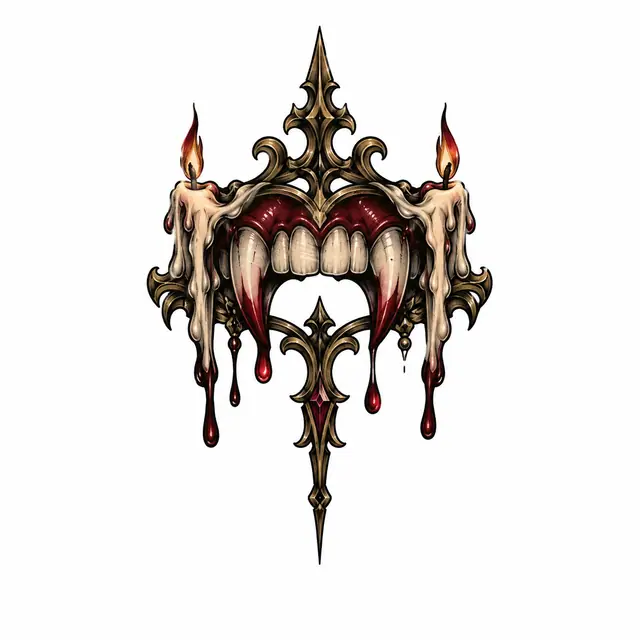
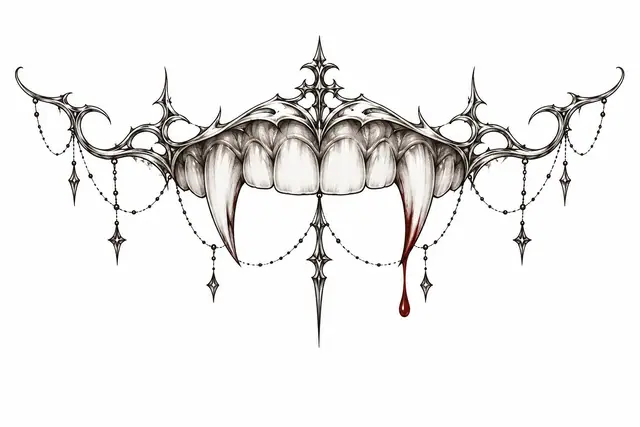
- Fangs dripping a single drop of blood. The smallest and simplest vampire tattoo. It works at 2 inches and is the best candidate for one red accent.
- Open coffin with roses inside. Victorian mourning meets vampire romance. The six-sided coffin shape is a good fit for the forearm or calf. Pair it with ideas from the black rose page.
- Victorian count in a high-collared cape, seen from behind. Clever for tattooing, because there is no face to get wrong. The cape becomes a large black shape that ages well on the back, thigh or calf.
- Goblet of blood with a bat-shaped stem. An object rather than a figure, compact and witty. See the bat page for more bat pairings.
- Vampire lips biting a rose. Red lips, black rose, or the reverse. Very effective in red and black.
- Castle on a cliff with bats. A landscape silhouette in blackwork, good as a forearm band or across the collarbone. Romania’s Bran Castle is often marketed as Dracula’s castle, but the castle in the novel is fictional.
Styles that suit a vampire
Black and grey realism is the standard for portraits. Pale skin, dark lips and deep shadow under the cheekbones are made for grey wash. Red and black is the vampire’s natural style: everything in black and grey except a single drop of blood, the lips or a rose. Browse our red and black designs to see how little red it takes.
Etching gives the look of a Victorian penny dreadful illustration and suits the count, the coffin and the castle. Neo-traditional vampires in burgundy and plum, framed in gold, are bold and readable for decades. Blackwork is best for silhouettes: the castle, the caped figure, the bats. Fine-line suits fangs, a goblet or a small coffin, but not faces.
A practical note on red ink: red pigments cause more allergic skin reactions than black. Most people have no problem, but if your skin is sensitive, ask your artist about a small test spot.
Sizing faces and placement
Faces are the hardest thing in tattooing to keep readable, because the features that make a face recognizable are small. As ink spreads slightly over the years, eyes and lips soften first.
| Design | Practical minimum | Good spots |
|---|---|---|
| Fangs with a blood drop | about 2 in | wrist, ankle, behind the ear, forearm |
| Goblet or small coffin | 3 in | forearm, calf |
| Count seen from behind | 5 in tall | calf, thigh, back |
| Castle with bats | 4 to 6 in wide | forearm band, collarbone, upper back |
| Vampire woman portrait | 5 to 8 in, face 3 to 4 in | outer thigh, upper arm, back |
The outer thigh is one of the best places for a vampire portrait: large, fairly flat and easy to cover or show. Our thigh designs show how tall compositions sit there. Vampires also feature heavily in our Victorian gothic designs, alongside lace, cameos and mourning lockets.
Using the prompts
Each vampire in the gallery is an AI concept with its prompt on display. Copy it, then change the collar, the pose, or “rose” to “goblet” to make it yours. Treat it as a starting sketch for your tattoo artist, who should redraw it from scratch, especially the face, since small AI errors in eyes and teeth are very visible once tattooed.
Vampire tattoo designs
Questions people ask
What does a vampire tattoo mean?
Popular readings include seduction and danger, immortality, eternal or obsessive love, and the outsider who lives by night. Many people also choose a vampire tattoo simply as a tribute to Gothic literature or classic horror films.
Where did the vampire legend come from?
Belief in the restless dead who return to harm the living is found in many cultures, but the vampire as Europe knows it comes mainly from Slavic and Balkan folklore. Reports from Habsburg officials about vampire cases in Serbia in the 1720s and 1730s spread the idea, and the word, across Western Europe.
What does a vampire fang tattoo mean?
Fangs with a drop of blood usually stand for desire, danger or a love of horror. Folklore vampires were not usually described with fangs; the prominent pair became standard through 20th-century film, so a fang tattoo is a nod to vampire cinema as much as to legend.
How big does a vampire portrait tattoo need to be?
For a realistic face in black and grey, plan for the face itself to be at least 3 to 4 inches tall, which means a full portrait of 5 to 8 inches. Smaller faces lose the eyes and lips first. If you want something small, choose fangs, a goblet or a bat instead.
What goes well with a vampire tattoo?
Bats, black roses, coffins, candles, a crescent moon, a castle silhouette and Victorian lace all pair naturally. A single red accent, usually a drop of blood, ties the pieces together.
Related motifs
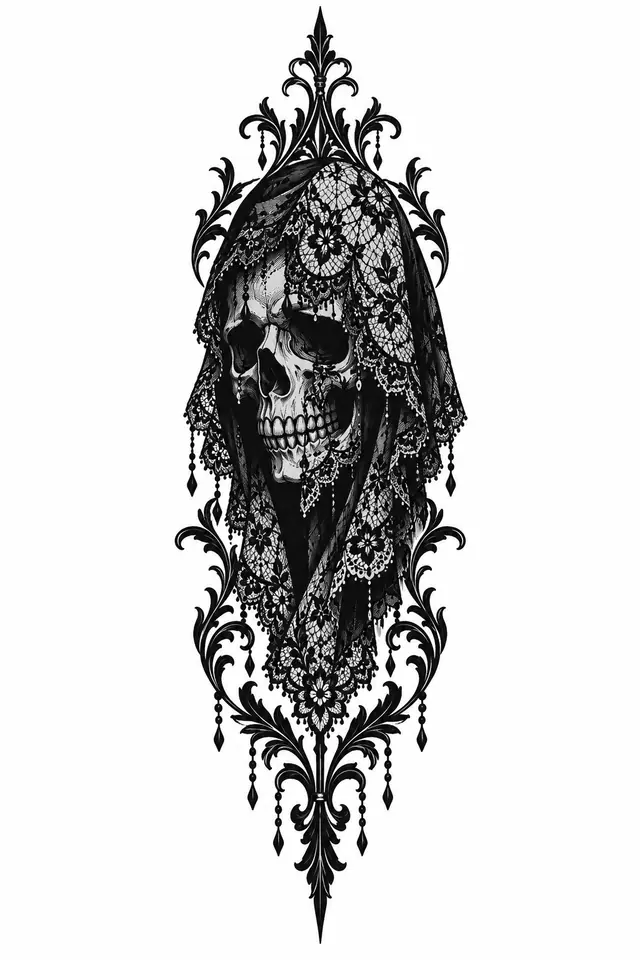 SkullMortality worn openly: the oldest reminder that life is short.
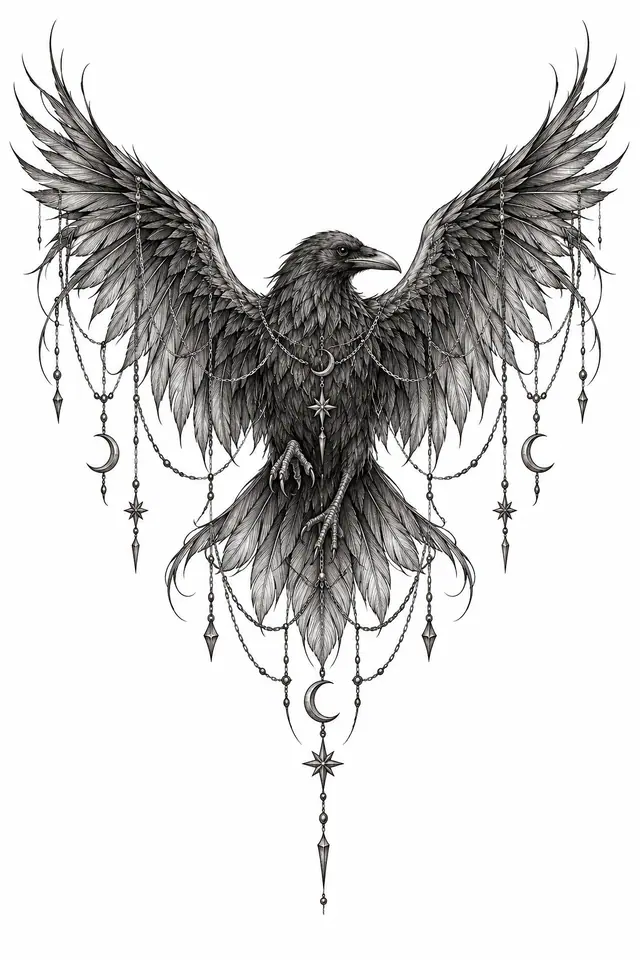 Raven and crowPoe's messenger, read as omen, memory and intelligence.
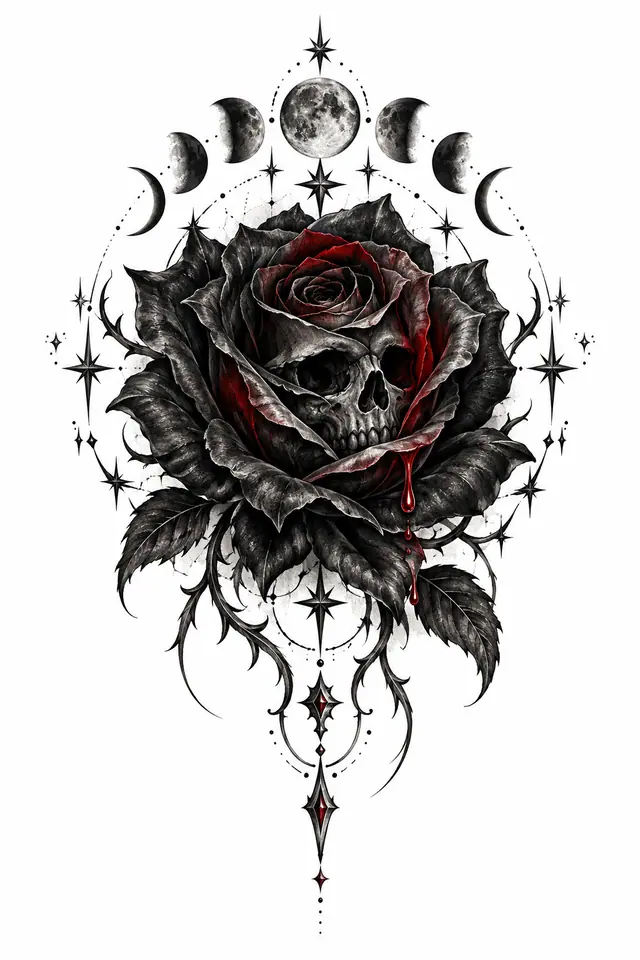 Black roseLove that outlives loss, grief and farewells.
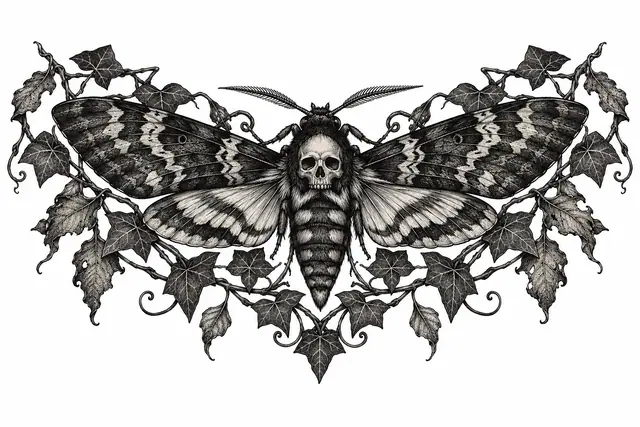 MothDrawn to the flame: transformation, night and the soul.
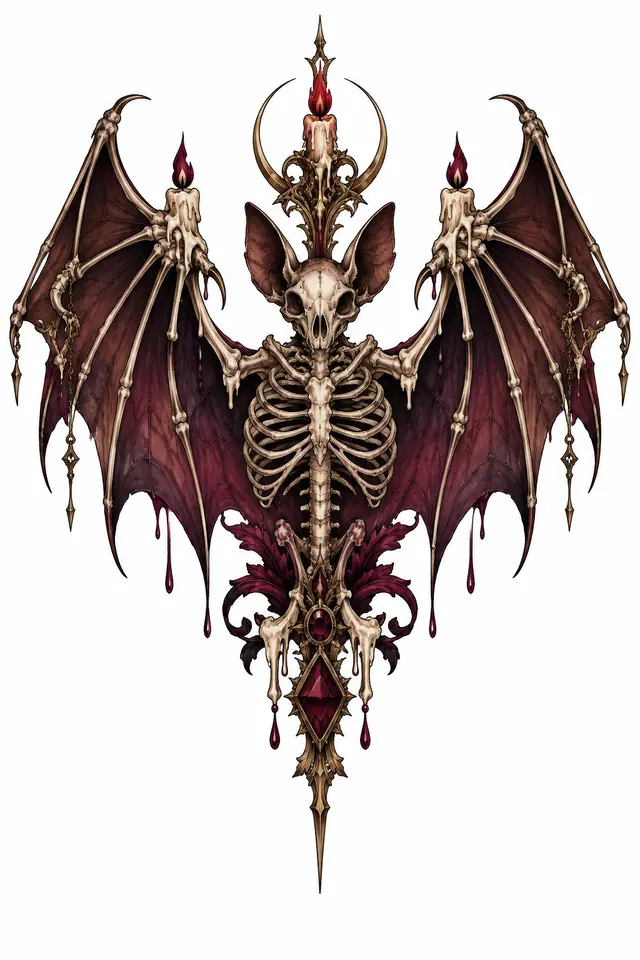 BatCreature of the night, linked with rebirth and Dracula.
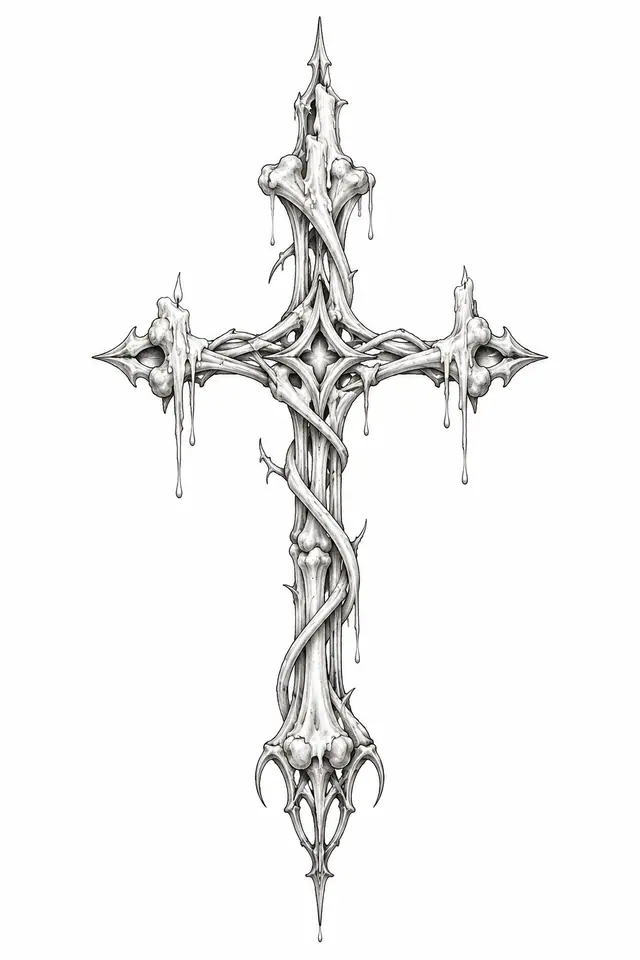 Gothic crossFaith in stone and thorns, from churchyards to chains.
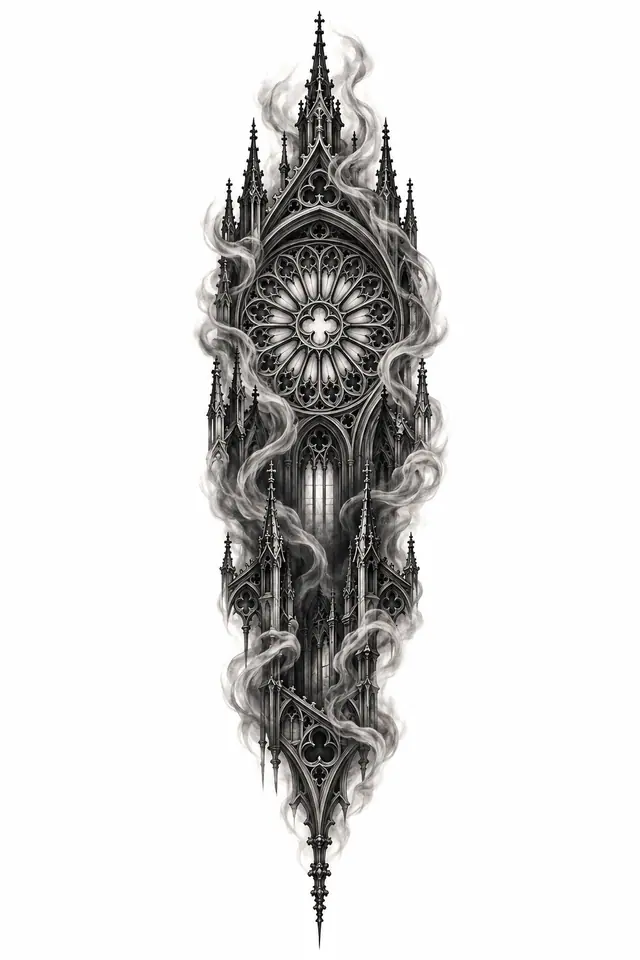 CathedralPointed arches and rose windows from 12th-century France.
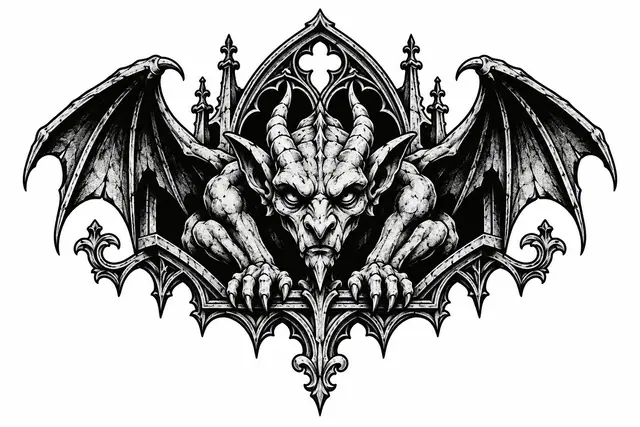 GargoyleStone guardians that kept rain and evil off the roof.
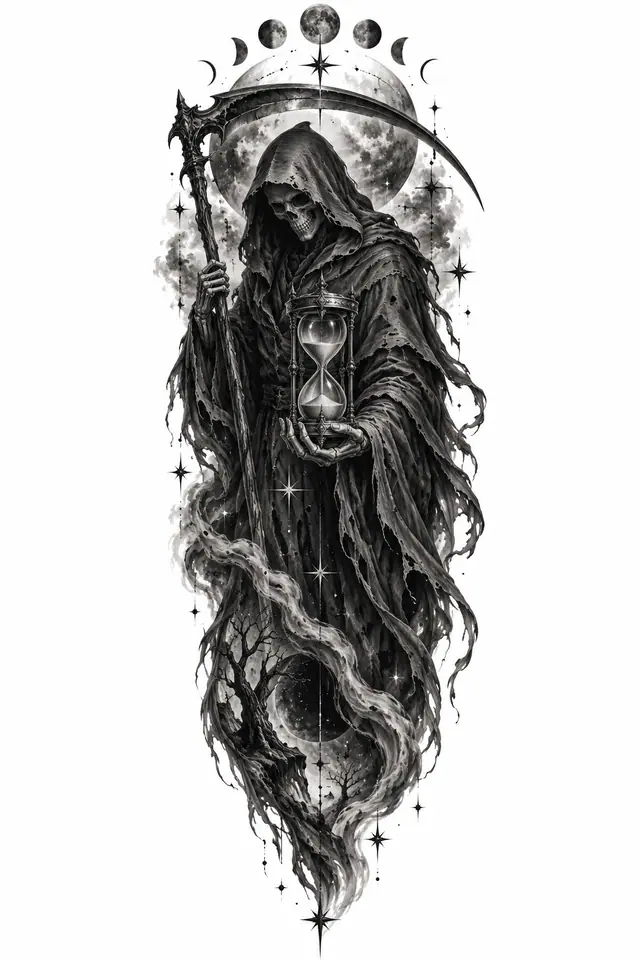 Grim reaperDeath personified, a reminder rather than a threat.