Gothic cross tattoos
A gothic cross is a Christian cross dressed in the ornament of medieval stone and metalwork: trefoil tips, tracery, thorns and roses. Some people wear it as faith, some as gothic style, and good design works for both.
65 designs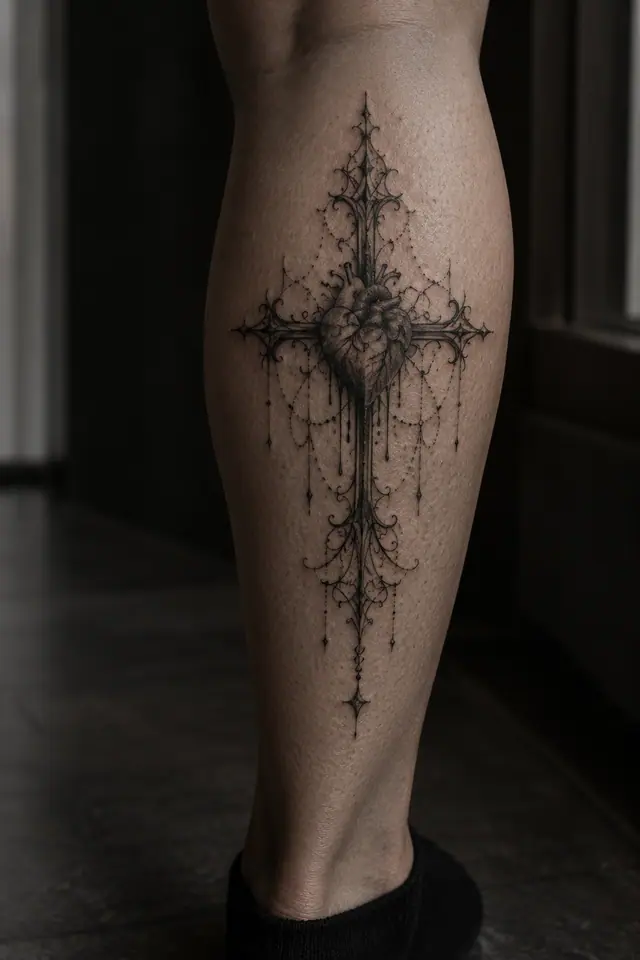
What makes a cross gothic
There is no single historical object called the gothic cross. The term describes a Christian cross decorated with the ornament of Gothic architecture and metalwork from roughly the 12th to the 16th century, or of the Gothic Revival in the 19th. Typical features:
- Trefoil or quatrefoil ends. Three or four rounded lobes at each tip, borrowed from church window tracery.
- Pointed tips. Each arm ends in a lancet point, like a Gothic arch.
- Crockets. Small curled leaf shapes climbing the edges, as on cathedral spires.
- A central medallion. Often a circle or quatrefoil where the arms meet, sometimes holding a rose window.
Those details are what separate a gothic cross tattoo from a plain Latin cross. They are also what demand size and careful linework.
Where it comes from
The cross had been the central Christian symbol for many centuries before the Gothic period. What the Gothic era added was its style. Medieval churches carried gilded processional crosses at the head of services, and goldsmiths finished their arms with trefoils, fleurs-de-lis and crystal or enamel medallions. Stone standing crosses rose in churchyards and market squares across Britain and Europe, and many were damaged or destroyed during the Reformation.
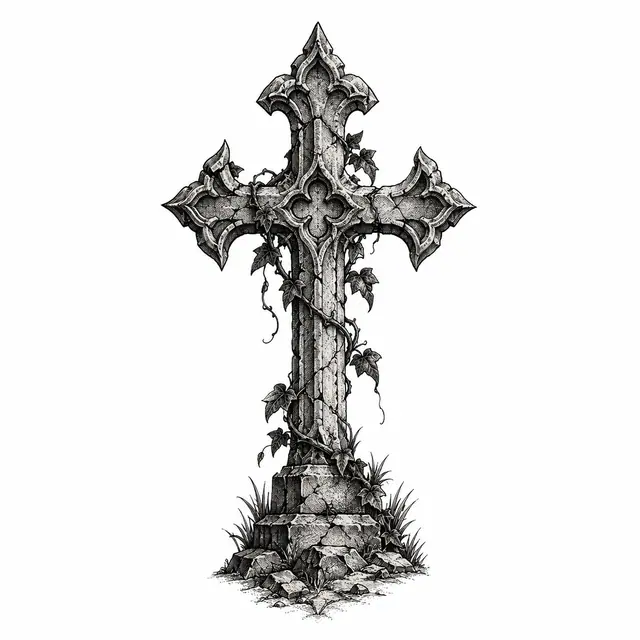
The look most gothic cross tattoos actually imitate is Victorian. During the Gothic Revival, architects such as A. W. N. Pugin argued that Gothic was the only proper Christian style, and new garden cemeteries like London’s Highgate, opened in 1839, filled with Gothic Revival crosses, angels and tombs. Add the deepening Victorian culture of mourning and you get the weathered stone cross, softened by ivy, that defines the gothic graveyard.
The goth subculture took up crucifixes as jewelry from the early 1980s, mixing devotional objects with mourning black. That is where the cross on a chain, worn as pure style, entered the gothic look. Our guide to gothic tattoo history traces how architecture, mourning and music fed into each other.
The inverted cross
The inverted cross needs a plain explanation, because it reads very differently to different people. In Christian tradition it is the Cross of Saint Peter. Early Christian writings say Peter asked to be crucified upside down because he did not consider himself worthy to die as Jesus did, and the inverted cross has appeared in Catholic art and papal settings with that meaning.
In modern popular culture, especially horror films and heavy metal, the inverted cross is widely used as an anti-Christian or satanic sign, and that is how most people will read it on your skin. The ornamental inverted cross in our gallery is drawn as decoration, but you should choose it knowing the likely reaction at work, with family or when traveling.
What a gothic cross means today
Common modern readings:
- Faith, expressed with more ornament and weight than a plain cross.
- Remembrance. A weathered stone cross with a name and dates is a classic memorial tattoo.
- Sacrifice and suffering, especially with thorned vines.
- Love and grief together, in the cross with a dripping heart, which echoes Catholic Sacred Heart imagery.
- Gothic identity, the cross as part of the Victorian graveyard look rather than a statement of belief.
Gothic cross tattoo ideas from the gallery
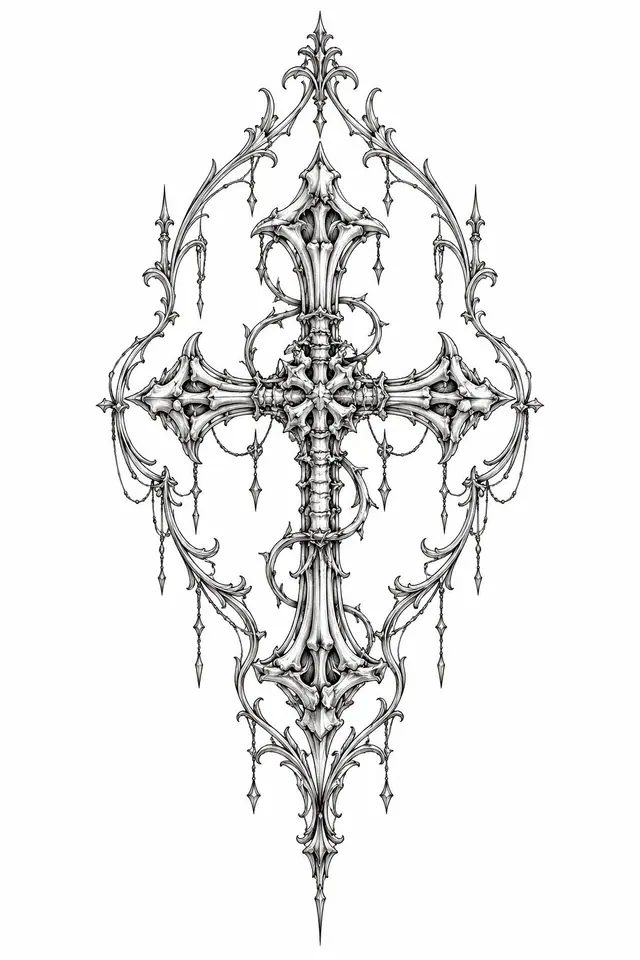
- Ornate cross with pointed trefoil ends. The archetype. Needs at least 3 inches tall for the trefoils to stay distinct.
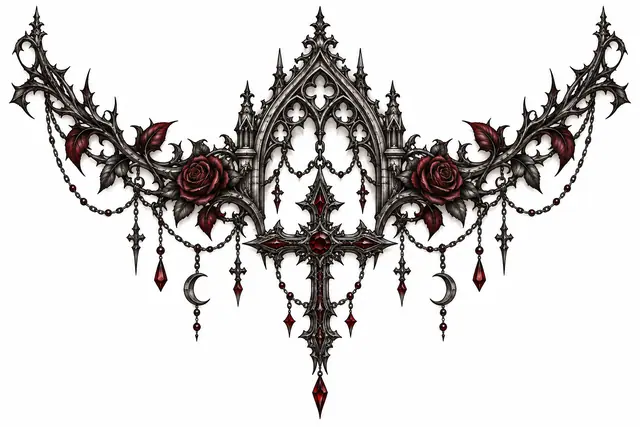
- Cross wrapped in thorned rose vines. The vines soften the straight lines and help it sit on curved areas. Pair it with ideas from the black rose page.
- Weathered stone graveyard cross. Cracks, moss and chipped edges in black and grey. The most popular memorial version.
- Cross on a chain with small charms. Drawn like jewelry, it can hang from a tattooed chain around the neck or rest on the sternum.
- Cross with a rose window at its center. Architecture inside the cross. See the cathedral page for rose window detail.
- Inverted ornamental cross with filigree. Read the section above first.
- Slim fine cross with a dripping heart. Delicate and narrow, ideal for fine-line work.
- Cross made of intertwined bones. Recalls bone-decorated chapels like the Sedlec Ossuary in the Czech Republic, and links the cross to memento mori imagery.
Styles that suit a gothic cross
A cross is mostly straight lines and symmetry, so the style has to protect both.
Fine-line crosses are among the most popular simple gothic tattoos. Keep trefoil ends large enough that their lobes don’t close up; on a 2-inch cross, a plain pointed end often ages better. See our fine-line designs.
Blackwork gives a bold, solid cross with ornament cut out in negative space, which is very durable. Black and grey is the best way to show weathered stone, with cracks and moss in soft shading. Etching suits a cross drawn like an engraving in an old prayer book. Red accent belongs on the dripping heart or a single rose. Dotwork can render a cross as carved, grainy stone.
Placement and size
- Spine: the natural home for a long cross, 6 to 12 inches. The spine is straight when you stand, so the cross stays straight. Browse our spine designs.
- Sternum: 3 to 6 inches, centered on the breastbone. Often combined with a chain.
- Inner forearm: 3 to 5 inches. Place it along the bone, not across it.
- Between the shoulder blades: 4 to 8 inches for a large ornate cross.
- Behind the ear, side of the finger, wrist: 1 inch or less, outline only.
Straight lines on a curved body need care. The forearm twists and the ribs curve, so a cross that looks straight on paper can look bent on skin. A good artist places the stencil while you stand in your natural posture and adjusts it before tattooing. Our guide on how to design a gothic tattoo covers this and other stencil questions.
Using the prompts
Each cross in the gallery is an AI concept, and you can open it to copy the exact ChatGPT prompt. Change the ends from trefoil to fleur-de-lis, swap the roses for ivy, or try it in etching. When you find one you like, ask your tattoo artist to redraw it with real symmetry, since AI often makes the arms of a cross slightly different lengths.
Gothic cross tattoo designs
Questions people ask
What does a gothic cross tattoo mean?
For many people it is a statement of Christian faith with a darker, more ornate look than a plain cross. Others wear it as a memorial, often styled like a weathered gravestone cross, or as part of a gothic aesthetic drawn from Victorian cemeteries. The added elements, such as thorns, roses or a heart, shape the reading.
Can I get a cross tattoo if I'm not religious?
Yes, and many people do. Just be aware that others will often read it as a religious statement, and some Christians may feel uneasy about a cross mixed with skulls or worn purely as fashion. Choosing ornament from church architecture keeps it respectful while still clearly gothic.
What does an upside-down cross tattoo mean?
Historically, the inverted cross is the Cross of Saint Peter, who according to early Christian tradition asked to be crucified upside down. In modern popular culture, especially horror films and metal, it is widely read as anti-Christian, and most people who see your tattoo will read it that way.
What is a cross with three-leaf ends called?
In heraldry it is a cross bottony, also called a trefoil cross, with each arm ending in three rounded lobes. A cross whose arms end in fleurs-de-lis is a cross fleury. Both forms were common on medieval church metalwork.
Where is the best place for a cross tattoo?
A cross is vertical and symmetrical, so it suits the spine, the sternum, the inner forearm, the side of a finger or behind the ear. Large ornate crosses look best centered on the upper back or along the spine.
Related motifs
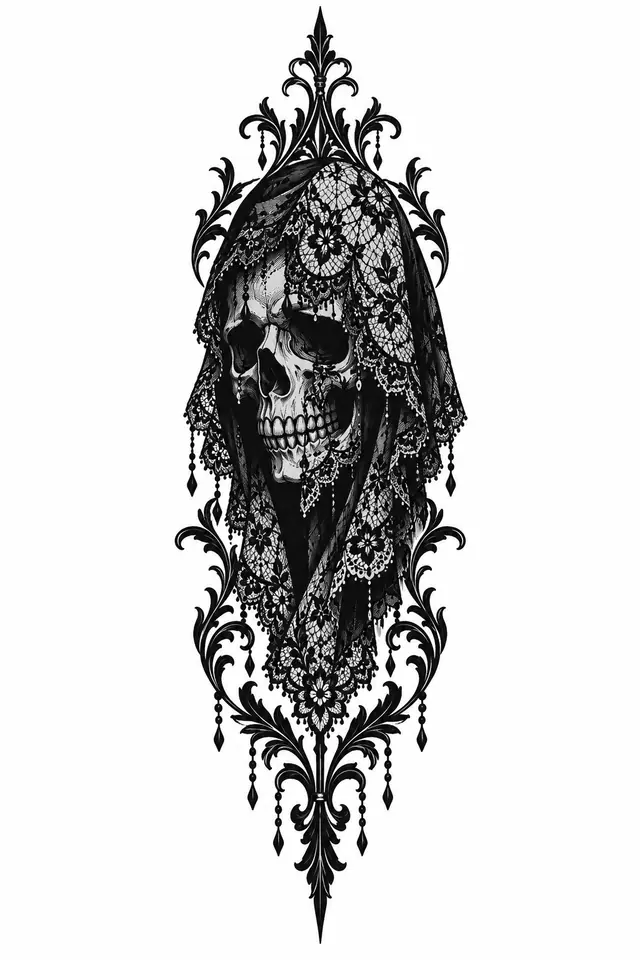 SkullMortality worn openly: the oldest reminder that life is short.
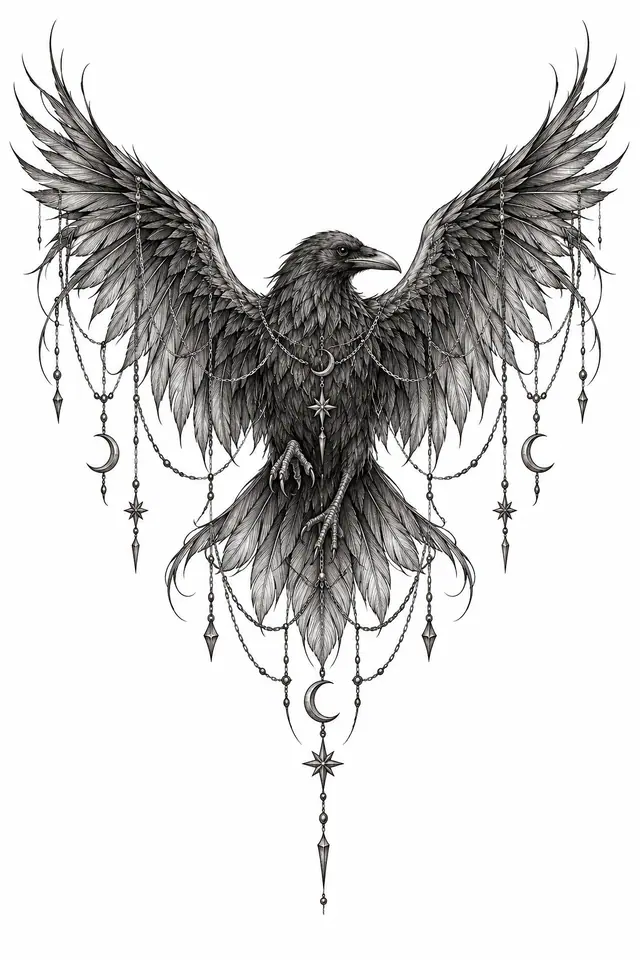 Raven and crowPoe's messenger, read as omen, memory and intelligence.
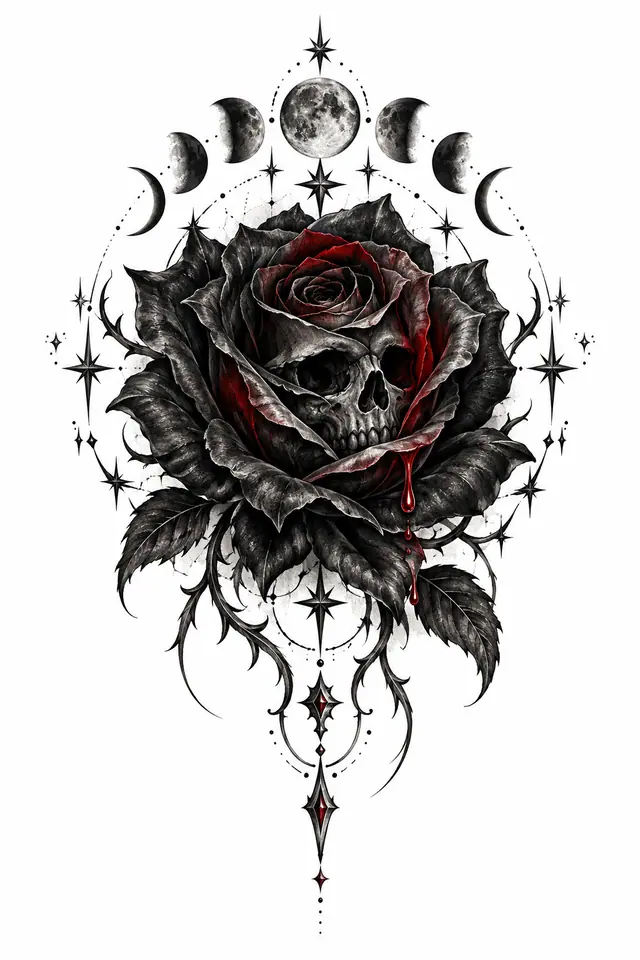 Black roseLove that outlives loss, grief and farewells.
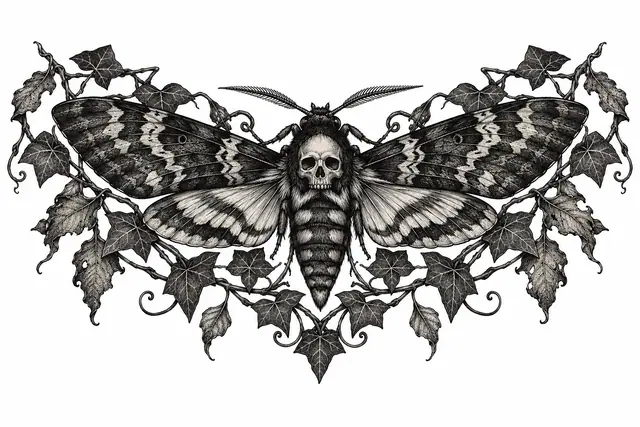 MothDrawn to the flame: transformation, night and the soul.
 BatCreature of the night, linked with rebirth and Dracula.
 CathedralPointed arches and rose windows from 12th-century France.
 GargoyleStone guardians that kept rain and evil off the roof.
 VampireRomance and hunger, from Victorian novels to now.
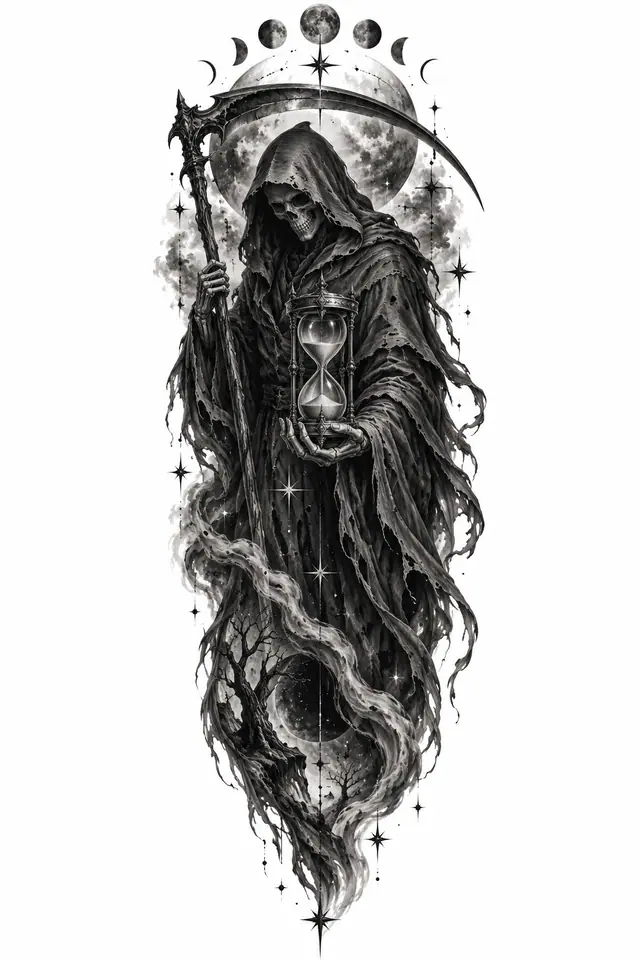 Grim reaperDeath personified, a reminder rather than a threat.